
10 OCT – 06 NOV 2026
OBLIQUO presents La Carencia by Ana Villanueva, in a new site-specific exhibition conceived for OBLIQUO’s new venue in Carabanchel. The exhibition, curated by Mario Gutiérrez Cru, is presented with the support of PROYECTOR..
La Carencia speaks of memory, loss, and that deeply human —and perhaps impossible— need to decide what to preserve and what to let disappear.
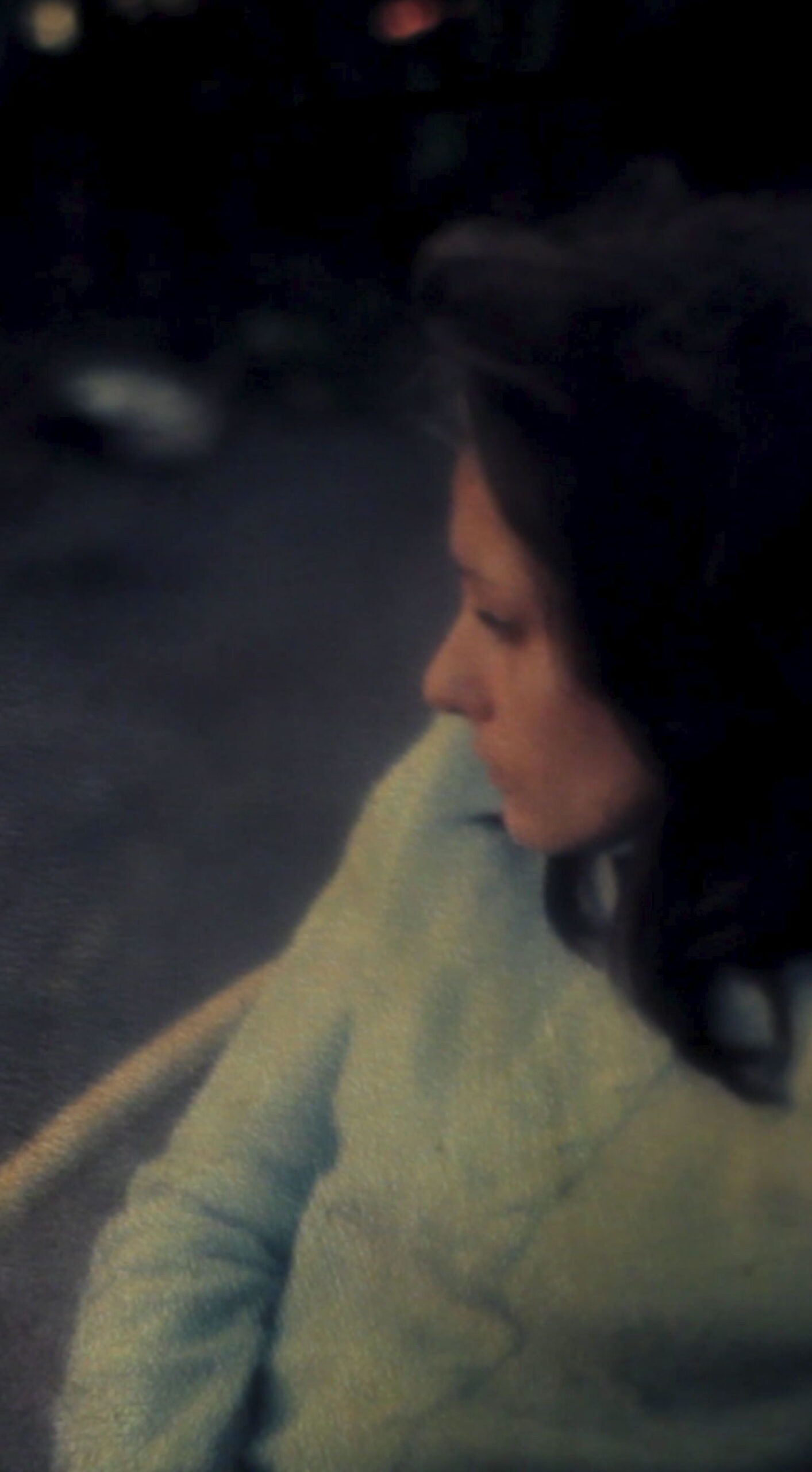
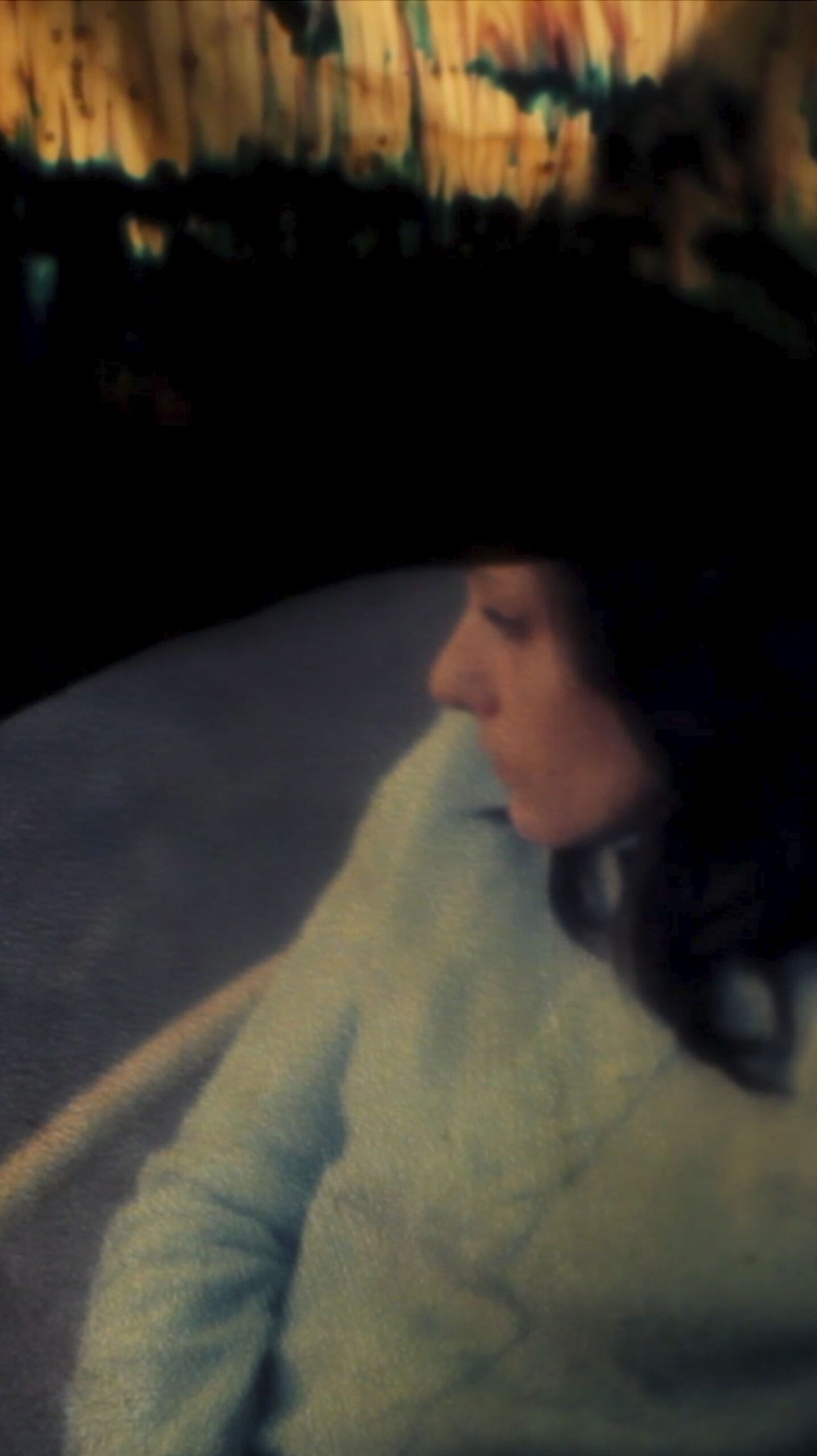
In this new version, the work is concentrated in a single found photograph. An anonymous family image, belonging to a story we do not know and yet somehow recognise. We do not know who these people are, nor what happened before or after the photographed moment, but there is something familiar in it: the gestures, the construction of a happy memory, the intuition of a life that continued far beyond the boundaries of the image.
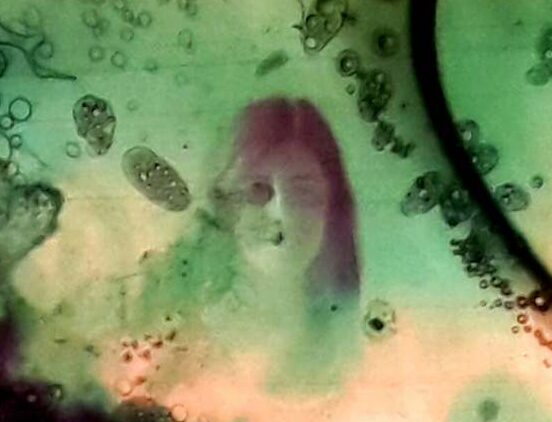
The photograph originally came from a slide, but the analogue device has disappeared. For its presentation at OBLIQUO, the image has been digitised and transferred to the screen, producing a material shift that also changes our relationship with it. We are no longer looking at a photographic object being projected, but at its digital translation: an image detached from its original support, capable of persisting, being reproduced, and transformed indefinitely.
And yet, it too disappears.
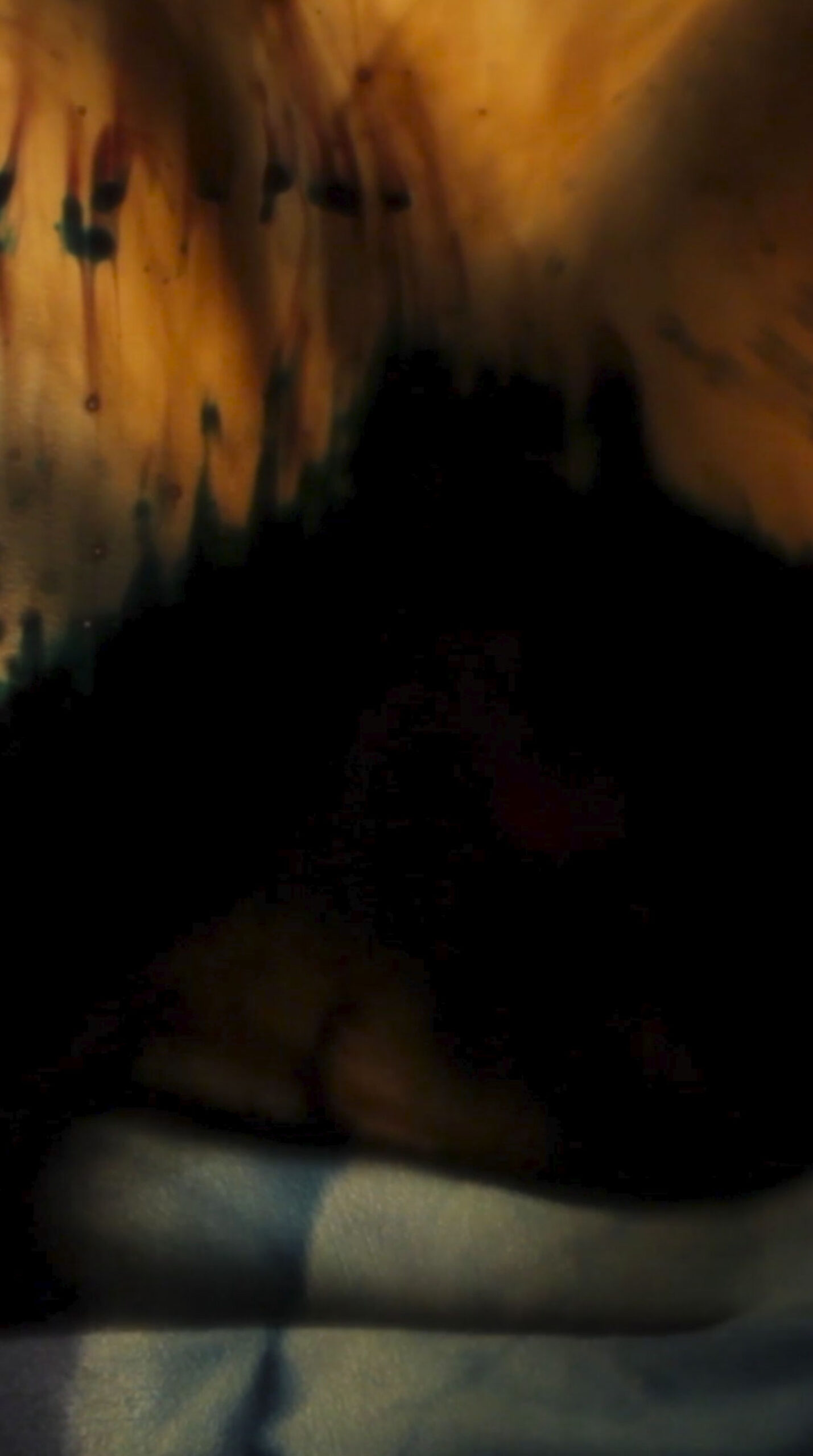
The work introduces a fracture into this contemporary promise of unlimited preservation. The image slowly begins to degrade, to lose definition, matter, and presence. What had been fixed in order to resist time is once again subjected to it. Digitisation does not save the memory; it merely transforms the form of its disappearance.
A voice accompanies this process. Someone recounts how, after years without writing, they find an old trunk filled with photographs, letters, objects, and memories of a past relationship. Returning to them means reliving a story, but also experiencing the physical weight of absence. The decision to part with these objects does not necessarily mean forgetting; rather, it forces us to ask what memory we choose to preserve, what we leave behind, and who decides what deserves to remain.
The voice thus introduces an intimate dimension that further destabilises the anonymous condition of the photograph. We do not know whether this story belongs to the people who appear in the image. Nor does it entirely matter. Image and narrative draw close without ever fully coinciding, creating an intermediate territory in which someone else’s memory inevitably begins to merge with our own.
As González Requena suggests, the constitutive distance of the gaze always reveals “the trace of a lack.” In this work, the distance between the viewer and what is being viewed is crossed by an absence that cannot be repaired. We contemplate an image that belongs to someone we do not know; we listen to a story that is not ours either, and yet both activate deeply personal mechanisms of identification, loss, and memory.
There is also an essential contradiction within the very act of preserving. We keep photographs because we know that bodies change, relationships end, and people disappear. The image is born, in a sense, from the awareness of that future loss. To photograph means to affirm: this happened. But also, inevitably: this is no longer happening.
For its site-specific adaptation at OBLIQUO, La Carencia leaves behind the intimacy of the family album and exposes itself directly to the street. The private image of an unknown family now appears in a storefront in Carabanchel, subjected to a public and accidental gaze. People who may never enter an exhibition can encounter, for a few seconds, the memory of someone they never knew.
This displacement from the domestic to the public intensifies the paradox at the heart of the work. An image originally created to preserve a private memory ends up becoming a collective memory at the very moment it begins to disappear.
La Carencia does not attempt to reconstruct what has been lost or complete the missing story. It inhabits precisely that void. Between presence and absence, between preserving and destroying, between remembering and choosing to forget.
Because perhaps memory does not consist only of what we manage to keep, but also of everything that, even after disappearing, continues to leave a trace.
OBLIQUO
Calle Alejandro Sánchez 94, Madrid.
Monday to Sunday from 9am to 9pm.
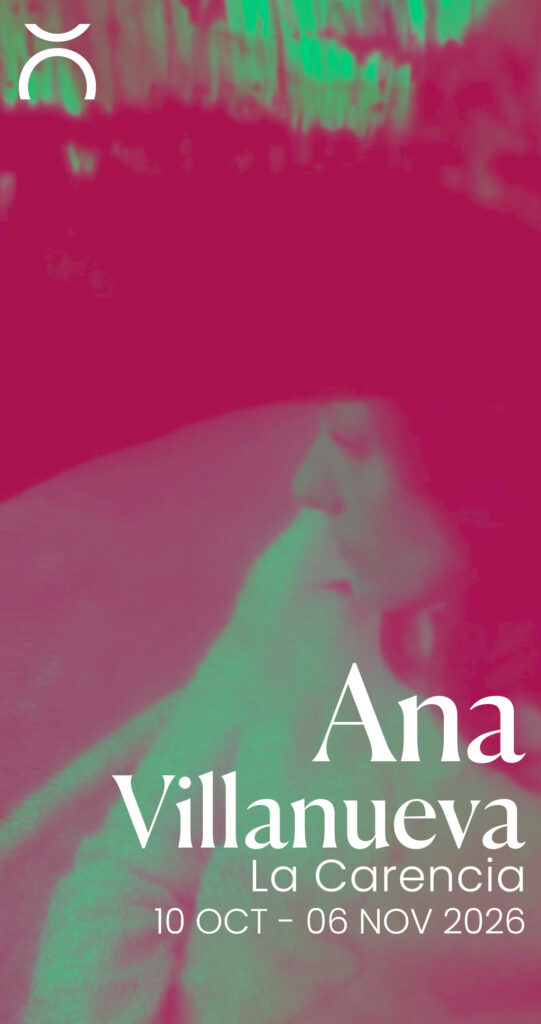
La carencia
03:25
2022-26
The temporality, the ephemeral, the disintegration, the disappearance, and memory are present in this work. The photographs depict happy moments captured by all: holidays, birthdays, family gatherings, portraits, and landscapes. The slides contain anonymous family material that has been found. The work involves appropriating discarded material, which is exhibited and then completely destroyed. As the viewer walks through the exhibit, they project themselves onto these familiar images. A complex situation emerges, where the viewer’s intimacy competes with their closeness to the images, while also experiencing the strangeness generated by the distancing of the device. González Requena, in the text «Introducción a una teoría del espectáculo», states: «Distance, therefore, as a constitutive element of the spectacle, reveals itself to us as the trace of a lack, that of the denied body of the spectator, who, reduced to a gaze, surrenders to the contemplation of another body, this time affirmed (in its exhibition) and therefore fascinating.» The work introduces a rupture when these images, as static as memories themselves, unaware of the passage of time, begin to fade away organically. The viewer experiences this destruction firsthand, witnessing an irreversible process that immortalizes a memory in a form that will never exist again.
…not every transformation is immediately susceptible to interpretation,» says Glusberg, adding, «The exchange value that an alteration of the body represents transcends the framework of its isolated representation: if, through a gesture, a frozen system of behaviors is transgressed, one is simultaneously challenging the stereotyped representations of the world of socially approved actions. But this goes beyond: conventional attitudes, when transgressed, put cultural apparatuses into crisis: they, as they propose rituals of behavior, are exposed in their regulatory function.» From this, an ethical analysis emerges related to the appropriation of another’s memories and their imminent destruction. Only three images are part of the work, but by their very movement, they invite reflection.
The slides are covered with plastic. Requena associates plastic with electronic bodies that lack odor and texture and seem immune to the traces of time. But something fails, and that hermetic container leaves a place open for forgetting to be inevitable. Memories, as a vital part of our lives, fade away.
La Carencia presents a reflection on memory, time, and the fragility of constancy. An external act disrupts the system of these three concepts, generating an unstable image that will soon reach its definitive disappearance. The images are portrayed as powerful holders of memory, a utopian retention because the intervention of time permeates everything. They exist between materialization and dematerialization, inviting analysis into the impossibility of reducing time and memory to a static image.
Ana Villanueva
I was born in the City of Buenos Aires. I studied Electronic Engineering at the University of Buenos Aires (UBA), specialised in Combined Languages at the University of the Arts (UNA) and I am currently studying for a Master’s degree in Combined Languages at UNA. My work encompasses experimental cinema, video, interactive installations, and sound objects. In 2019, I received First Prize in the Art and Technology of the National Fund for the Arts contest. In 2018, together with Marto Alvarez, I curated the video exhibition ZELPORTRET480, which was screened in the following cities: AGX in Boston, Uniondocs in New York, Zapadores Museum in Madrid, La casa del Bicentenario in Buenos Aires, among others. My films have been screened at festivals such as the Mar del Plata International Film Festival, Ann Arbor (USA), Curta8 in Curitiba (Brazil), the Super OFF festival in Sao Pablo (Brazil), Play Festival (Argentina), among others. I am particularly interested in temporality, the ephemeral, disintegration, disappearance, memory, the unstable image, materialization and its dematerialization, anguish and its symptoms and the acceleration of time.