
10 OCT – 06 NOV 2026
We don’t know what to do with time except turn it into images.” — Chris Marker
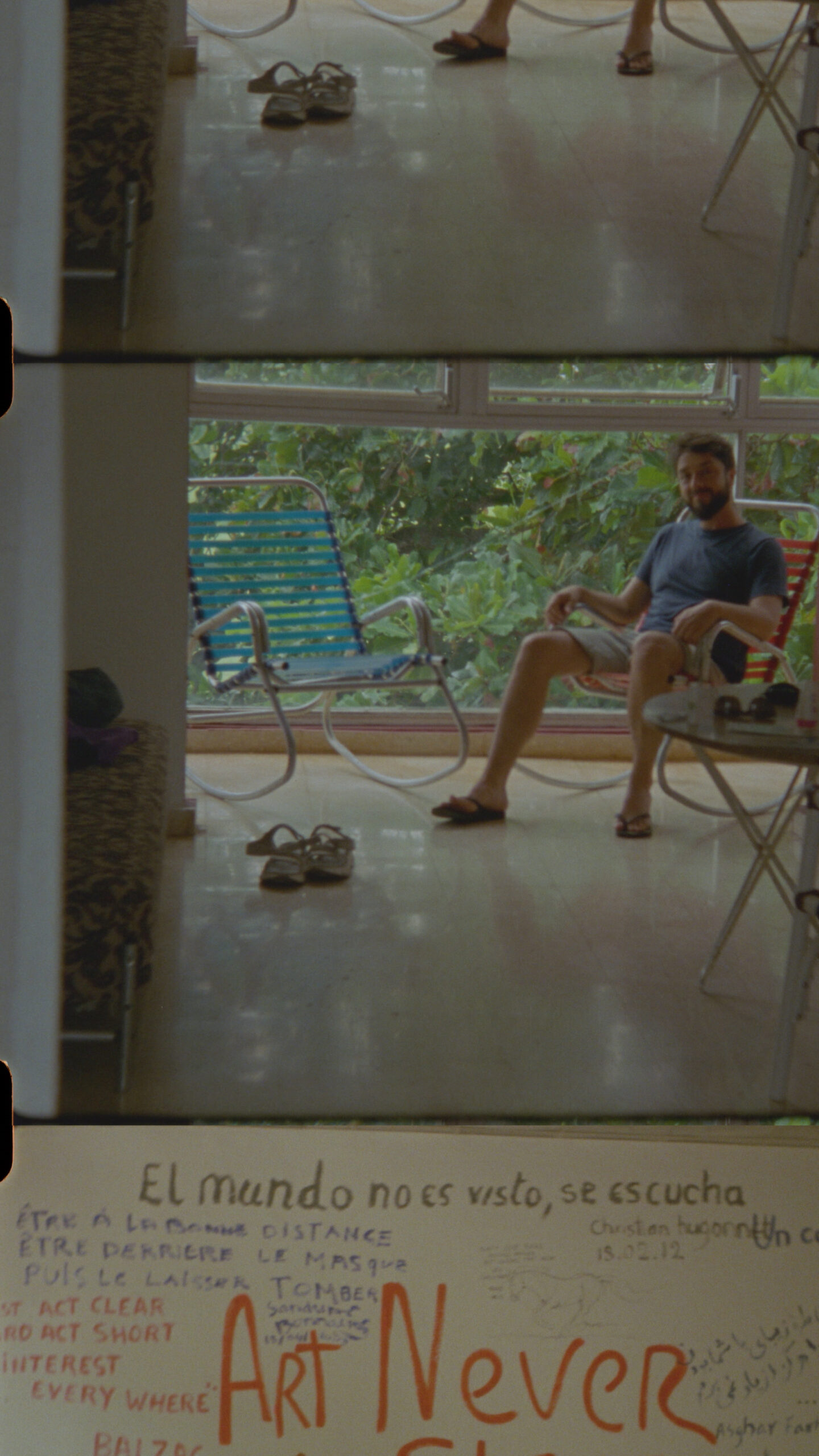
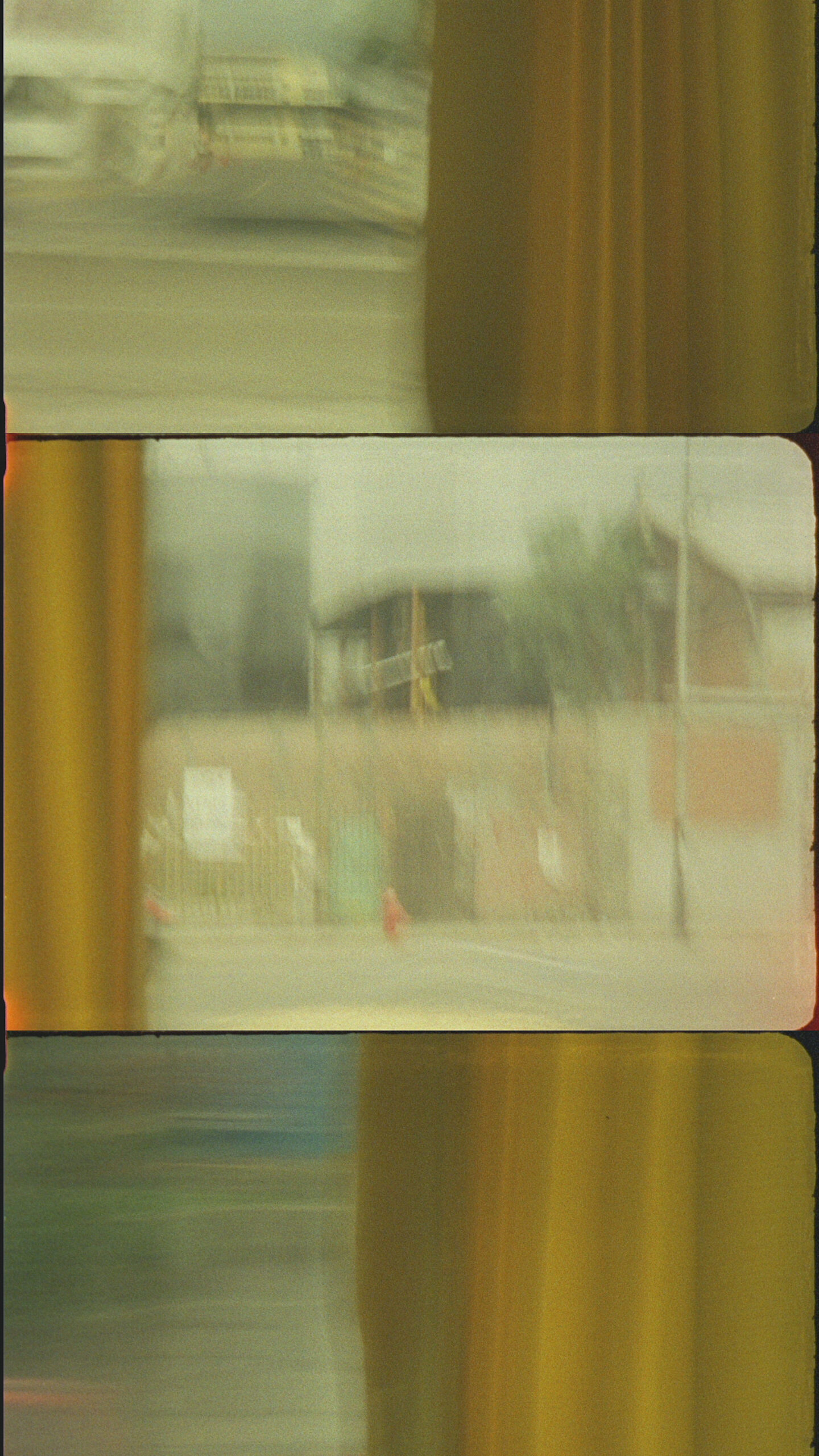
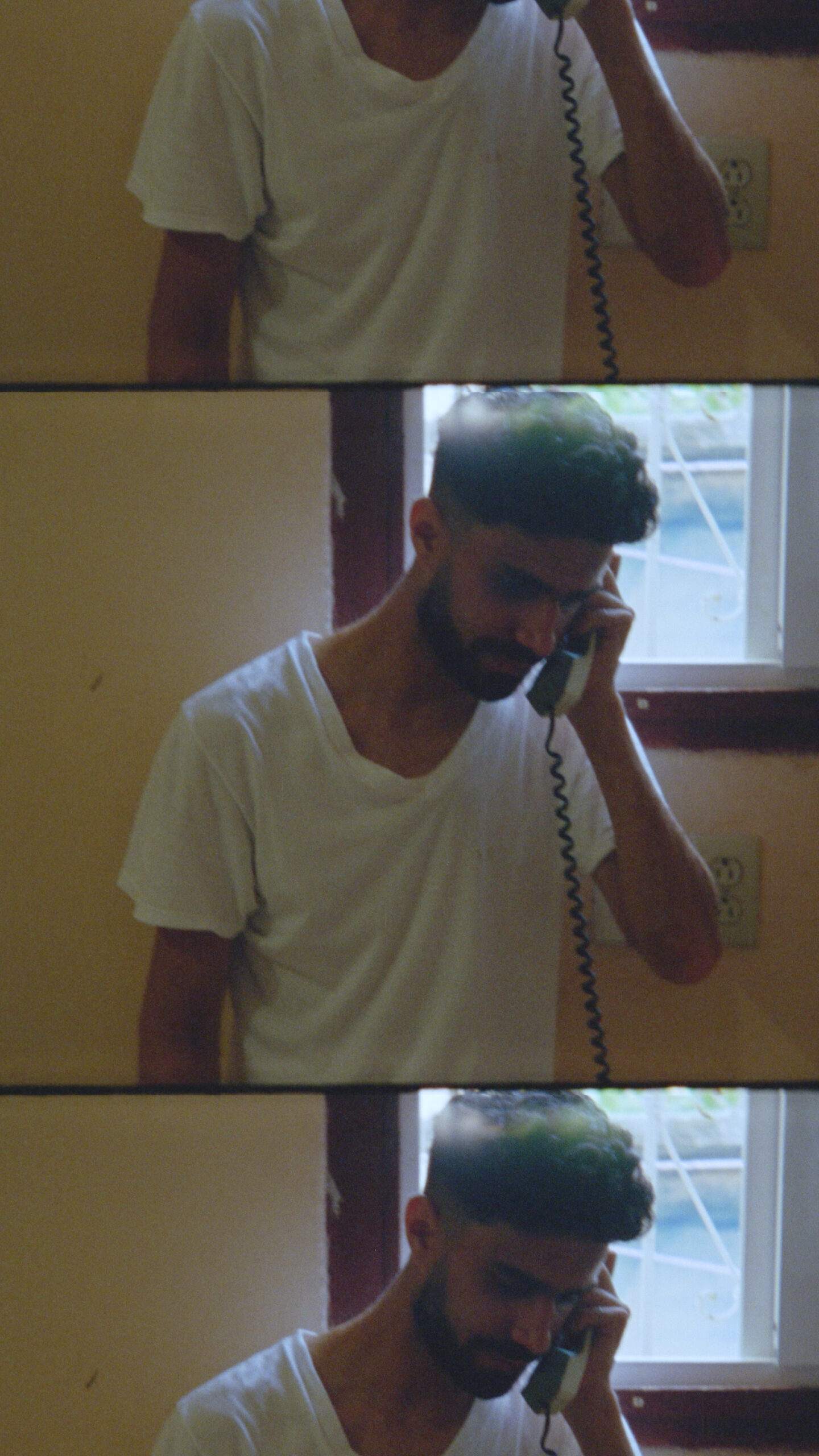
OBLIQUO presents 16mm by Alarcón Izquierdo, a site-specific exhibition conceived for OBLIQUO’s new venue in Carabanchel. Curated by Mario Gutiérrez Cru, the exhibition is presented with the support of PROYECTOR. It brings together a selection of works made on photochemical film over the past five years and reformulated for the specific context of the space.
There is something paradoxical about presenting 16 mm cinema through a screen. A material conceived to move physically, frame by frame, reappears transformed into a digital image, vertical and looped. Between these two poles —film and screen, matter and file, the unrepeatable gesture and infinite repetition— lies Alarcón’s work.
Since 2020, Alarcón has used a 1954 Paillard Bolex to capture images in Madrid, New York, Havana, Cuzco, Arequipa, Panama, Galicia and the Spanish Mediterranean coast. Journeys, encounters, family members, friends, landscapes and small staged situations form an archive that constantly shifts between home movies, travel diaries and formal experimentation.
Yet perhaps what matters most is not so much what appears in front of the camera as the act of filming itself.
In contrast to the virtually limitless capacity of the digital image, photochemical cinema forces decisions to be made. Film has a length, a cost, a duration. Every time the shutter is released, something is consumed. Filming becomes a physical and conscious gesture once again: choosing when an image begins and accepting, too, when it ends.
Alarcón himself describes this process as the search for a form of cinema in which “the gesture itself was the result.” The camera thus ceases to be merely a recording device and becomes a mechanism of attention.
The images in 16mm are small temporal units. Fragments that seem to contain memories but which, precisely because of their brevity, never form a closed narrative. A face, a movement, a street, a body, a light. The viewer inevitably completes what is missing.
Memory works in a similar way. It does not preserve an experience in its entirety, but rather certain images that return again and again, altered by time. Alarcón recalls understanding this capacity of the medium after developing footage of his mother walking along a Pacific beach: the result was, in his words, “more beautiful than the memory itself.” If memory tends to idealise experience, here film seems to idealise the instant.
For its presentation at OBLIQUO, these miniature cinematographies find a second life within the language of contemporary screens. The vertical format, autoplay and the loop —mechanisms usually associated with the fast and compulsive consumption of images on social media— are used in the opposite direction: not to accelerate our gaze, but to slow it down.
Repetition allows us to notice what may initially have gone unseen. A movement returns, a gesture changes meaning, an apparently simple image begins to reveal details.
There is a certain irony in using tools designed to keep us endlessly looking at a screen precisely in order to make us look more closely.
In OBLIQUO’s street-facing window, this displacement takes on another dimension. Images born from a mechanical camera from the mid-twentieth century now circulate in front of pedestrians, cars and mobile phones. Home movies become public; intimacy enters the urban flow; a finite material enters the seemingly infinite territory of the digital image.
16mm thus exists between two different temporalities of cinema. One belongs to matter, processing, mechanics and waiting. The other to immediate circulation, the screen and repetition.
Between the two, the gesture remains.
That instant in which someone decides to raise a camera and film.
OBLIQUO
Calle Alejandro Sánchez 94, Madrid.
Monday to Sunday from 9am to 9pm.

16 mm
03:25
2021-26
Alarcón Izquierdo
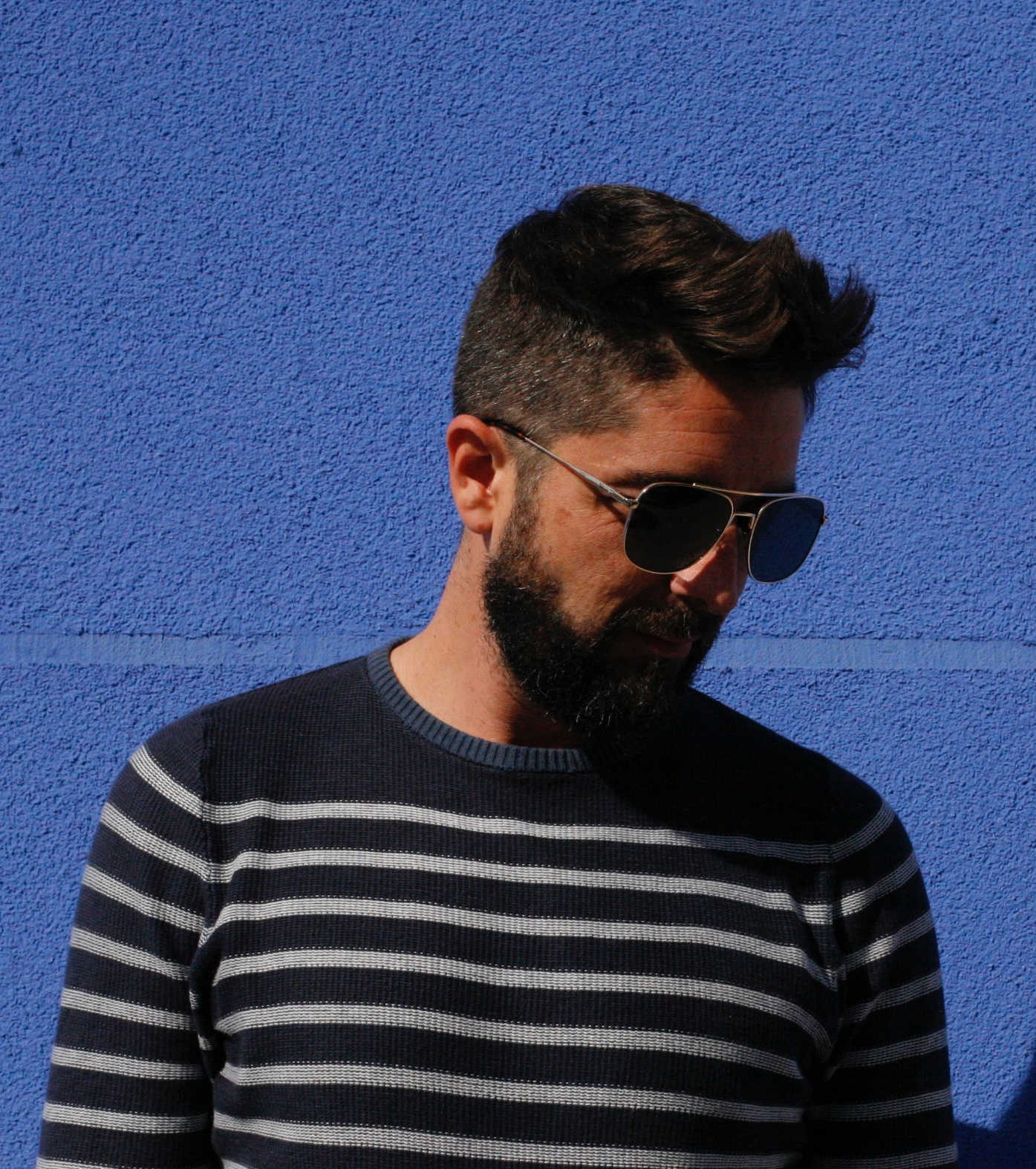
Samuel Alarcón Izquierdo (Madrid, 1980) is a filmmaker and broadcaster. His work has been presented at the Venice Biennale, MACRO in Rome, Nuit Blanche in Paris and Madrid, the Seville European Film Festival, and DocumentaMadrid. He was an artist-in-residence at the Royal Academy of Spain in Rome, where he made his first feature film, La ciudad de los signos (2009), an essayistic journey through the filmography of Roberto Rossellini that received the Audience Award at DocumentaMadrid.
In 2013, he created El cine que viene, a radio programme on Radio Nacional de España dedicated to promoting independent and experimental cinema from Spain and Latin America, which has helped build a community around filmmakers working in these fields.
His second feature film, Oscuro y Lucientes (2018), explores the case of Francisco de Goya’s missing head and premiered at the Seville European Film Festival. It received the Madrid CreaLab Award for Best Screenplay and the Jerry Goldsmith Award for Best Original Score, among other distinctions.
In 2020, he premiered the short film Déjame hablar, dedicated to composer Luis de Pablo, at the Venice Biennale, and received the Award for Best Sound at ALCINE.