
13 AGO – 5 SEP 2026
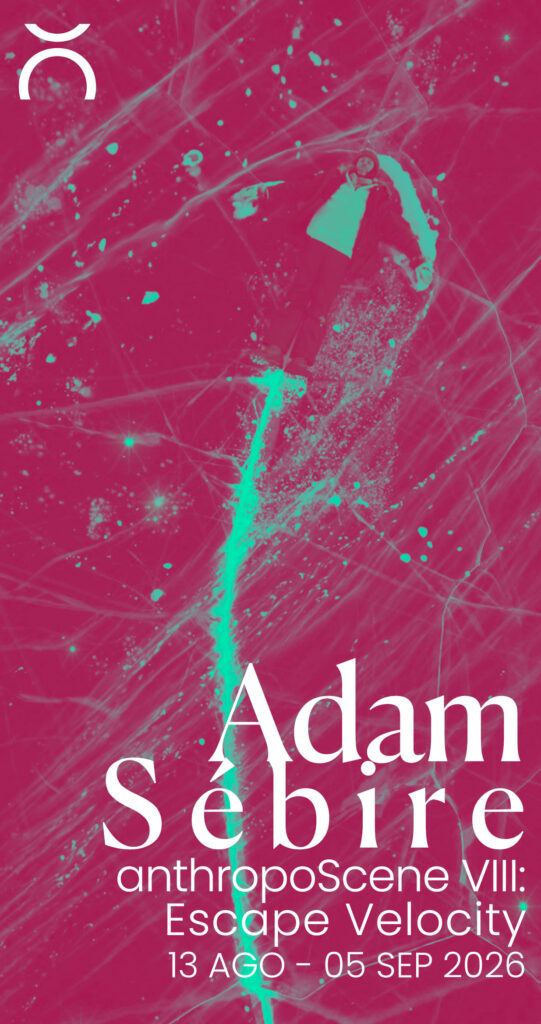
OBLIQUO presents anthropoScene VIII: Escape Velocity (2023) by Adam Sébire. The exhibition, curated by Mario Gutiérrez Cru, is presented with the support of PROYECTOR.
“We do not inherit the Earth from our ancestors; we borrow it from our children.” This well-known statement, often attributed to Indigenous traditions, resonates throughout anthropoScene VIII: Escape Velocity, a work that confronts one of the central contradictions of our time: humanity’s growing technological power and its enduring inability to detach itself from the natural systems that sustain it.
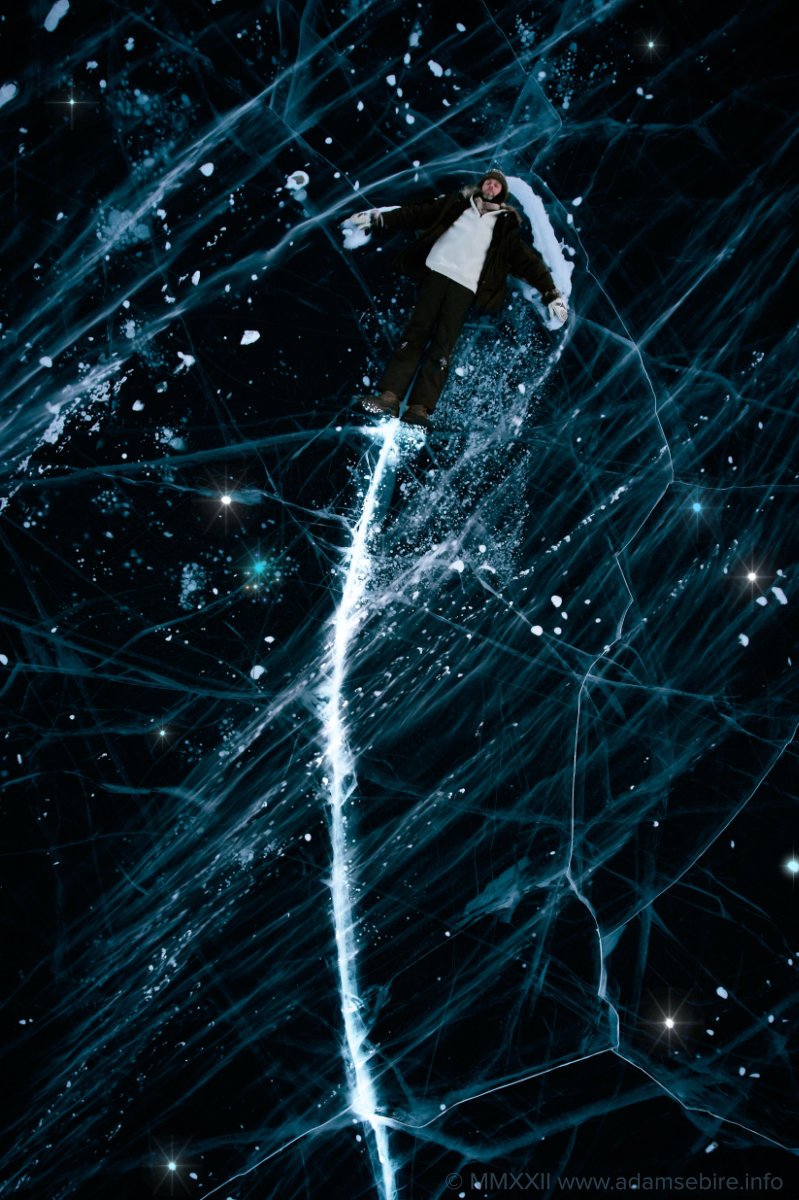
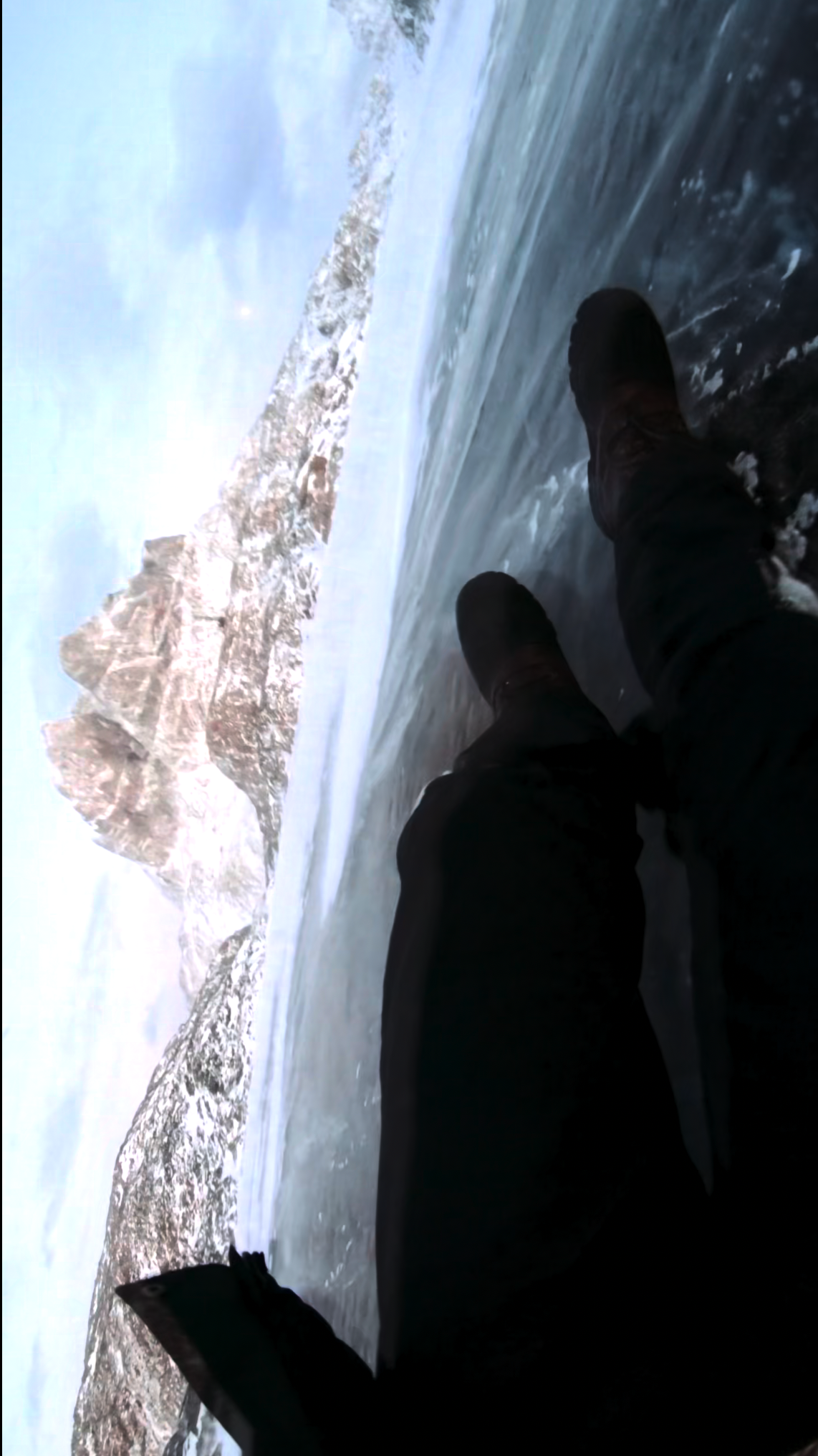
The piece unfolds within an apparently silent landscape: a frozen Arctic lake whose scarred surface reveals methane bubbles trapped beneath the ice. Within this setting, a man attempts to cross but ultimately falls hard onto the frozen ground. The gesture, simple and almost absurd, acquires an allegorical dimension that permeates the entire work.
The title refers to the speed required to escape a planet’s gravitational pull. Yet Escape Velocity is less concerned with the possibility of escape than with its impossibility. The work emerged as a critical response to certain techno-utopian narratives that imagine humanity’s future beyond Earth, from the colonisation of other planets to the fantasy of an elite capable of insulating itself from the ecological consequences of its own actions. The theorist Douglas Rushkoff has described this logic as The Mindset: the belief that wealth and technology will allow a privileged few to evade the crises that will affect everyone else.
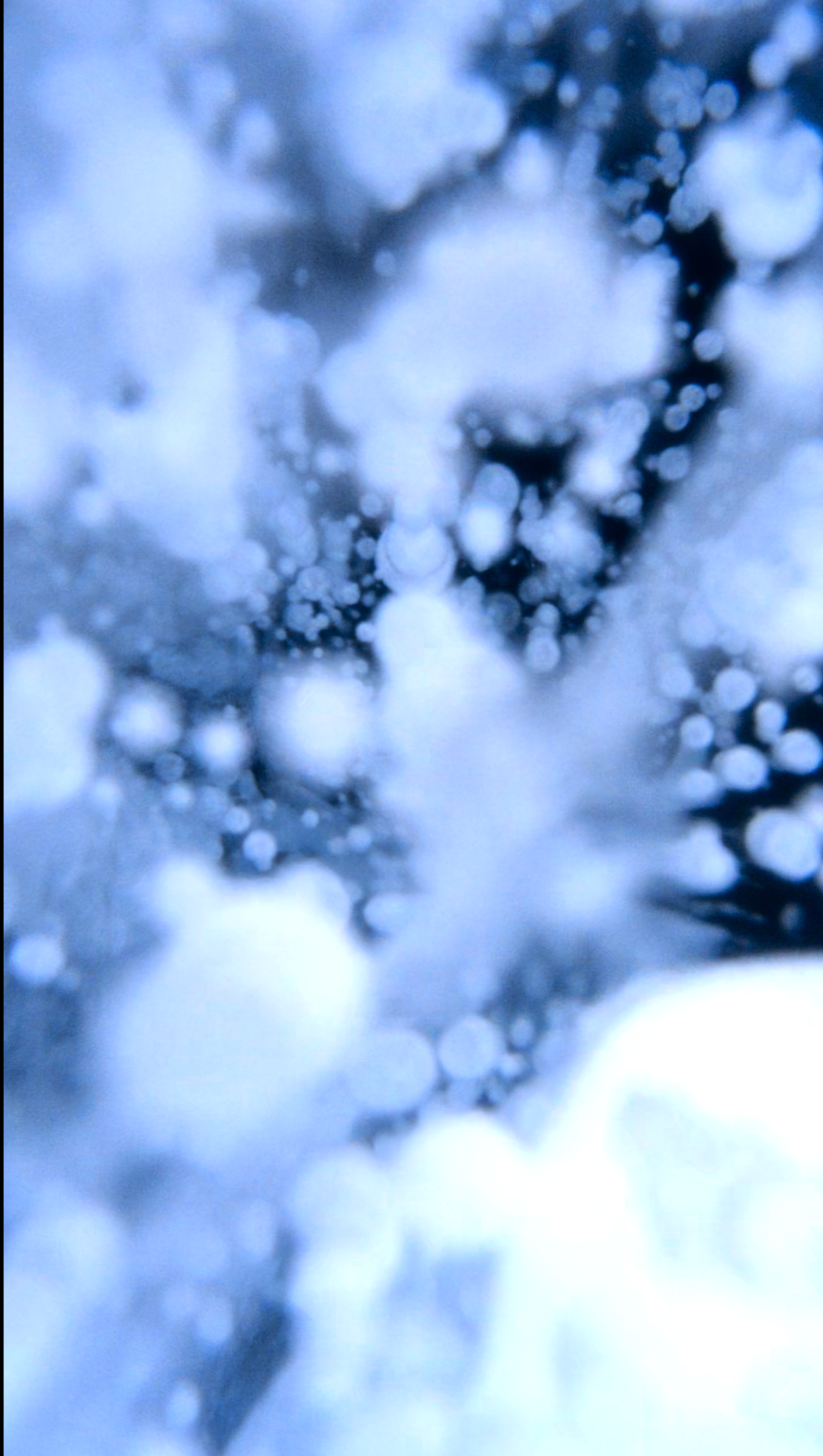
Sébire counters this narrative through an image of remarkable formal economy. There is no space-age epic, no promise of technological transcendence. There is only a body confronting a fragile surface, moving across a landscape marked by the material traces of climate change. The methane bubbles visible beneath the ice function as a spectral presence: remnants of geological and ecological processes that, far from belonging to the past, continue to act beneath our feet.
Presented within OBLIQUO’s vertical storefront display, the work acquires a particular resonance. The human figure appears suspended between ascent and collapse, between conquest and vulnerability, visible both to visitors entering the space and to passers-by encountering it from the street. The vertical format intensifies this tension, transforming the screen into a kind of contemporary column where the promise of elevation inevitably confronts the force of gravity.
Adam Sébire’s practice is characterised by a sustained attention to the relationships between landscape, perception, and environmental crisis. Through video, photography, and installation, his work examines the narratives through which we imagine our relationship with the planet and the natural systems that surround us. Far from either catastrophe-driven rhetoric or direct illustration, his works often operate through visual metaphor, creating spaces for reflection in which the poetic and the political remain inseparable.
In anthropoScene VIII: Escape Velocity, the artist proposes a brief yet incisive meditation on the Anthropocene and the fantasies of exception that accompany it. If modernity was built upon the belief that nature could be mastered, the work reminds us that there is no outside. There is no replacement planet, no technology capable of abolishing our material condition. As suggested by the fall that structures the piece, perhaps the future depends not on achieving escape velocity, but on finally accepting that we remain here. On Earth. And within it.
OBLIQUO
Calle Valencia 17, Madrid.
Monday to Sunday from 9am to 9pm.
Escape Velocity
03:30
2023
Music composed by Martin Fondse. Preview below. Première: Jan 2023.
A frozen Arctic lake.
Methane bubbles loiter beneath its scarred surface.
A man tries to cross, but falls hard on the ice.
A short meditation on our relationship with our planet
(and the desire by some to take flight from it altogether).
The work was provoked by hubristic arguments from certain self-proclaimed «technovisionaries» that our species’ regenerative future does not lie on Earth. Theorist Douglas Rushkoff calls this ‘The Mindset’ — «a belief that with enough money and technology, wealthy men can live as gods and transcend the calamities that befall everyone else. It’s a way of applying the ‘exit strategy’ of a Silicon Valley startup to civilization itself.»
In August 2024*, stratigraphic scientists are expected to declare that we, once passengers, now crew of spaceship Earth, have departed the benign Holocene epoch and crossed the frontiers of the Anthropocene.
But we can never achieve ‘escape velocity’ from nature; it is us and we are of it. Our regeneration — and perhaps our redemption — may come not through taking flight from our injured planet, but from being brought back to Earth … with a thud.
But our technovisionary never achieved escape velocity.
He had left the Holocene — now striding confidently towards the Anthropocene — yet he could not escape from nature: it was he and he was of it.
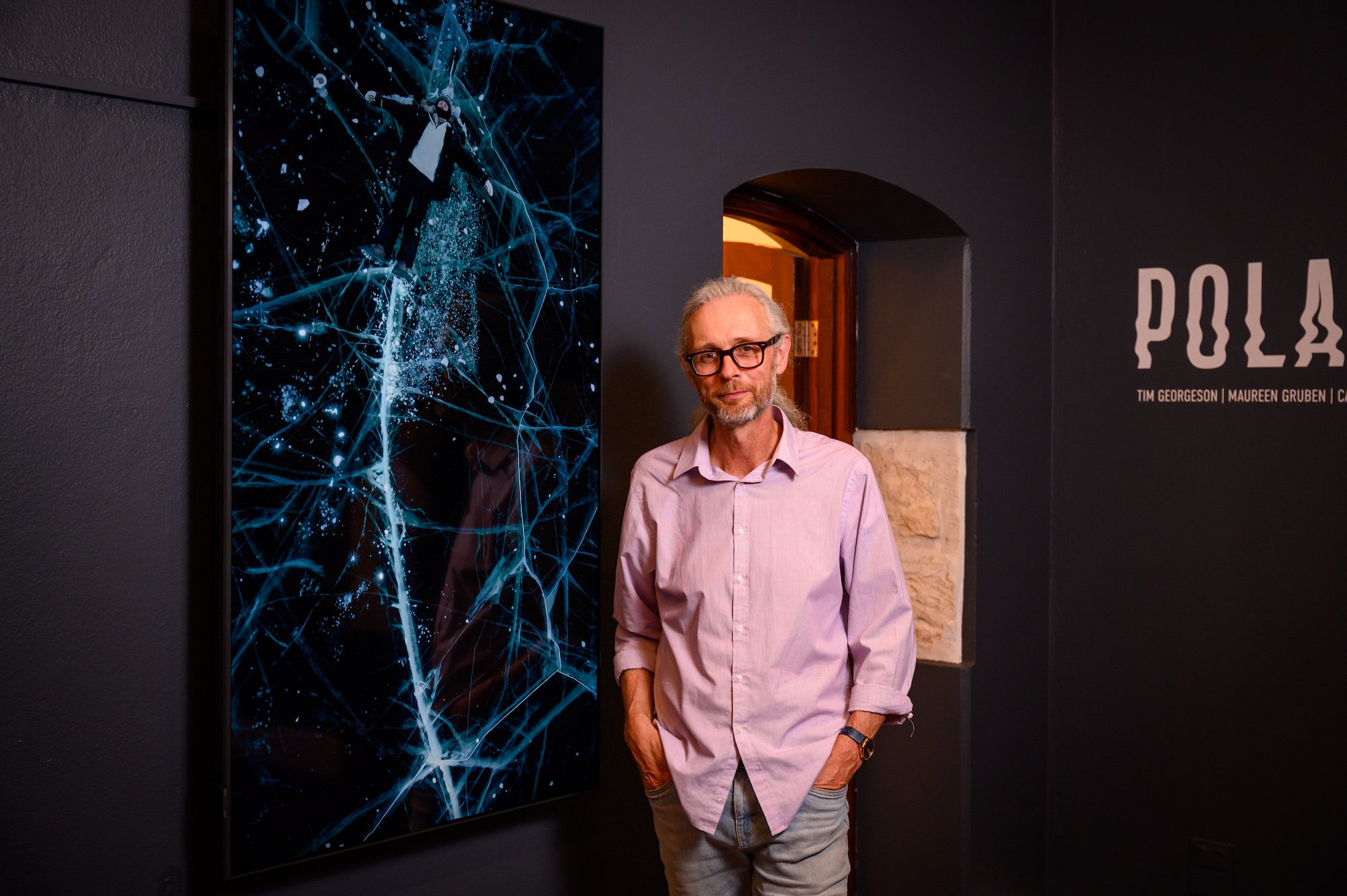
Adam Sébire
Adam Sébire is an Australian visual artist, filmmaker, and photographer whose practice explores the intersections of landscape, ecology, geology, and contemporary culture. Working across video, photography, and installation, he investigates the ways humans perceive, transform, and imagine their relationship with the natural environment. His work combines poetic observation with critical inquiry, addressing themes related to climate change, the Anthropocene, and narratives of technological progress.
His works have been exhibited internationally in museums, art centres, festivals, and biennials across Europe, Asia, and Oceania. Among his distinctions is the Earth Photo Prize, awarded by the Royal Geographical Society in recognition of his contribution to visual reflections on contemporary environmental transformations.