
10 JUN – 11 JUL 2026
OBLIQUO presents Casual Sounds and Possible Melodies / Beth Short’s Last Walk (2019) by Albert Bayona. The exhibition, curated by Mario Gutiérrez Cru, is presented with the support of PROYECTOR.
“Images operate on other images.” Harun Farocki’s statement resonates at the core of Casual Sounds and Possible Melodies / Beth Short’s Last Walk, a work built around a double drift—sonic and visual—in which the archive ceases to function as a closed document and becomes unstable matter.
On the sonic level, the piece originates in the playback of shellac records at 78 rpm on a gramophone, later digitised and transformed into a melody of degraded textures, where the traces of the translation process remain audible, as if the medium itself refused to disappear completely.
Within this friction between media, sound is not presented as a transparent element, but as an eroded surface. The seams of the digital process are not concealed; instead, they become visible as a constitutive part of the work, underlining the impossibility of a clean restitution between past and present.
The visual component is constructed from archival material related to the last known locations associated with Elizabeth Short, known as Beth Short. The sequence does not reconstruct a closed narrative, but instead suggests a fragmentary journey, a nocturnal drift that brings the viewer closer to a possible final trajectory—always incomplete, always elliptical. The “last walk” is not presented as narrative, but as a suspended visual hypothesis.
In this tension between degraded sound and indirect image, the work reflects on the mechanisms through which audiovisual reality is constructed. The montage does not aim to resolve the mystery, but to insist on its persistence as a mode of perception: what is not fully shown is precisely what structures the gaze.
Albert Bayona’s practice, which evolved from painting towards digital art and technological media, operates in a transitional space between disciplines. His work explores landscape and its processes of transformation, as well as the representational strategies that shape our experience of reality. Through the intersection of painting, video, photography, music and digital technologies, his work interrogates the devices that construct contemporary images and their zones of deception, montage and displacement.
In Casual Sounds and Possible Melodies / Beth Short’s Last Walk, these lines of inquiry are condensed into a work where archive, sound and fragmented narration operate as unstable systems. There is no definitive reconstruction, only a choreography of remnants, in which image and sound remain in a shared state of drift.
OBLIQUO
Calle Valencia 17, Madrid.
Monday to Sunday from 9am to 9pm.
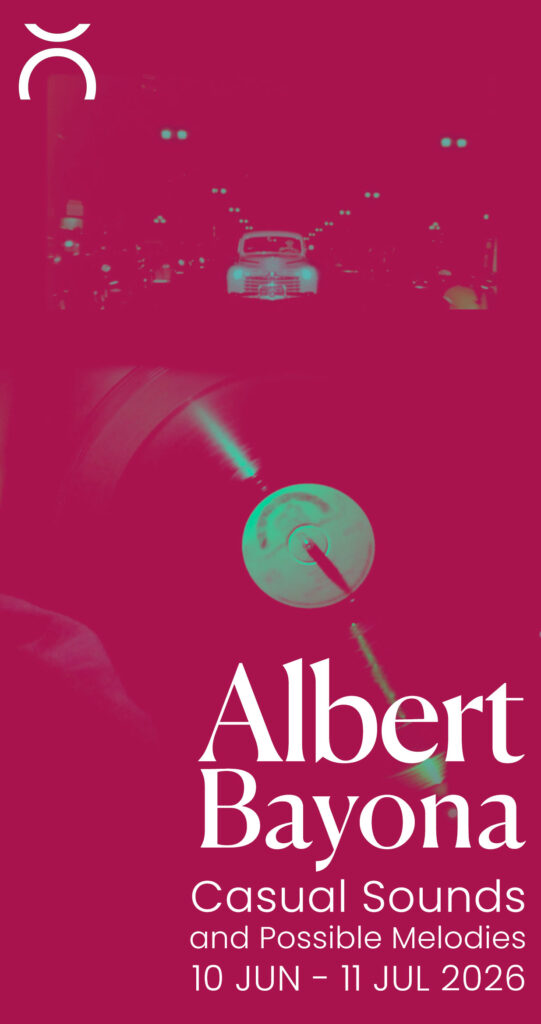
Casual Sounds and Possible Melodies / Beth Short’s Last Walk
10:00
2019
The project originates from the recovery of sounds from 78 rpm shellac records played on a gramophone. The original material is subsequently digitized and restored.
From this process, recovered fragments are transformed into new melodies and compositions built through repetitive motifs, variations, textures and sonic accidents.
The source material is connected to the American composer Hoagy Carmichael, who also appeared in films such as To Have and Have Not alongside Lauren Bacall.
Beth Short’s Last Walk
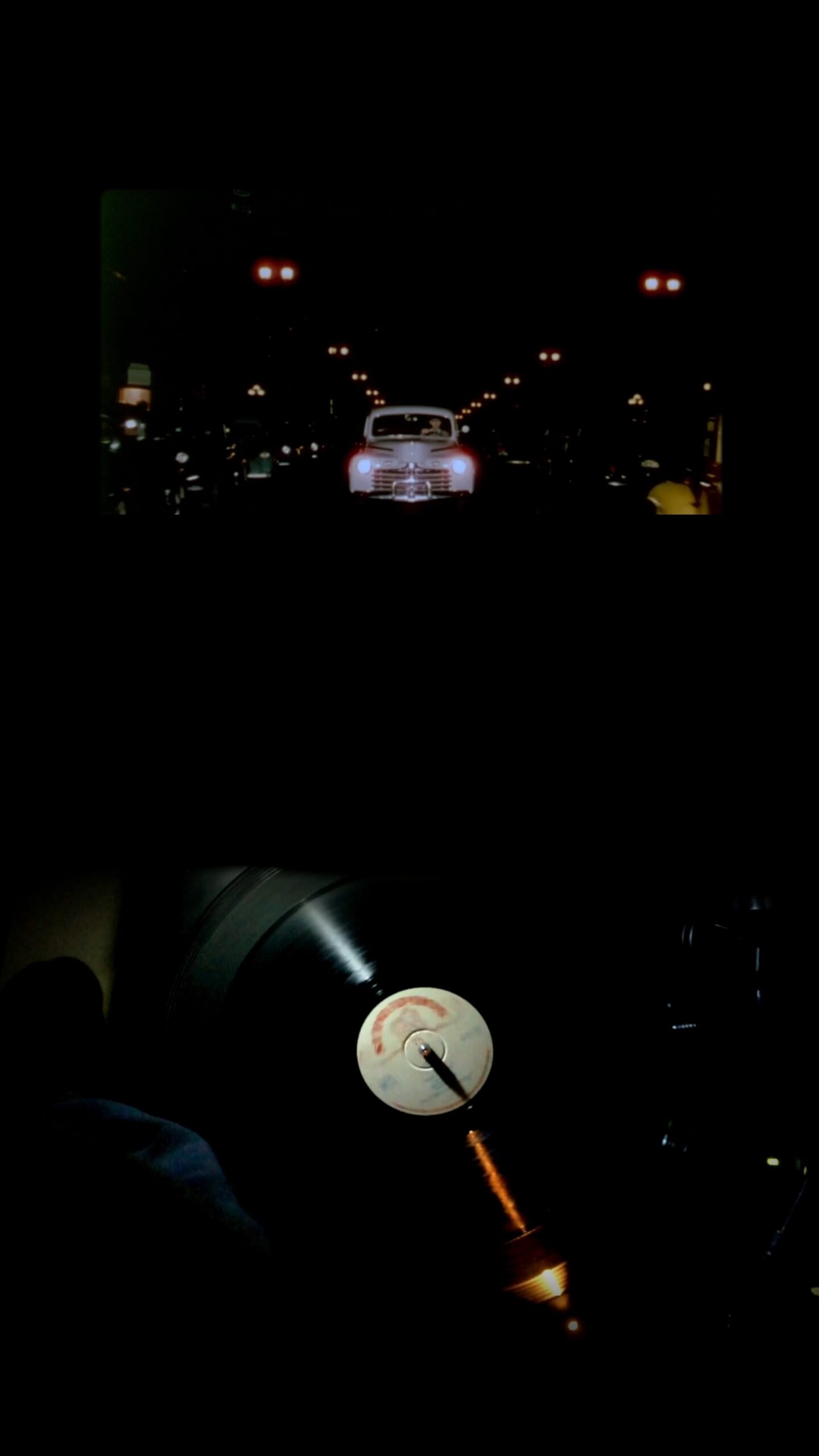
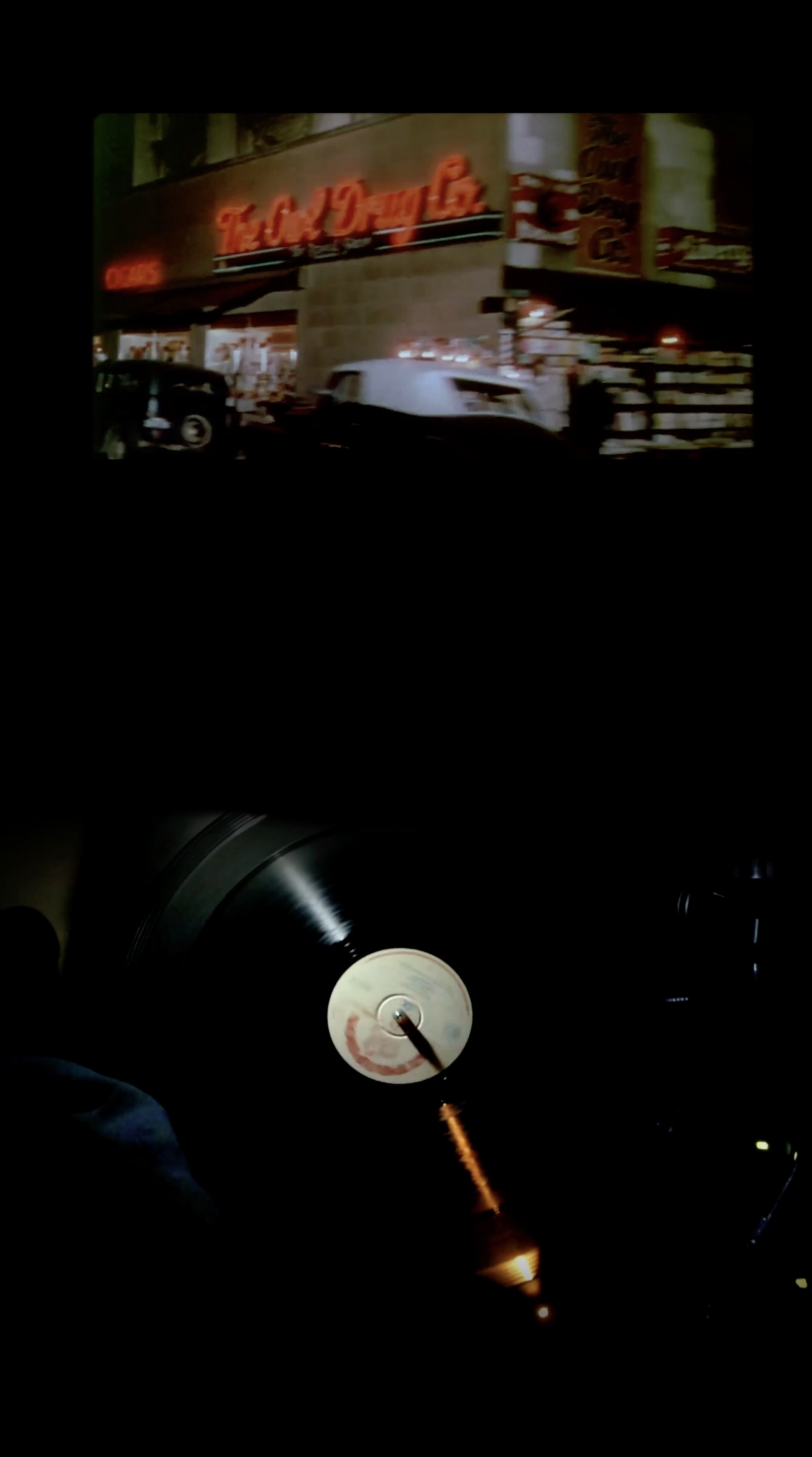
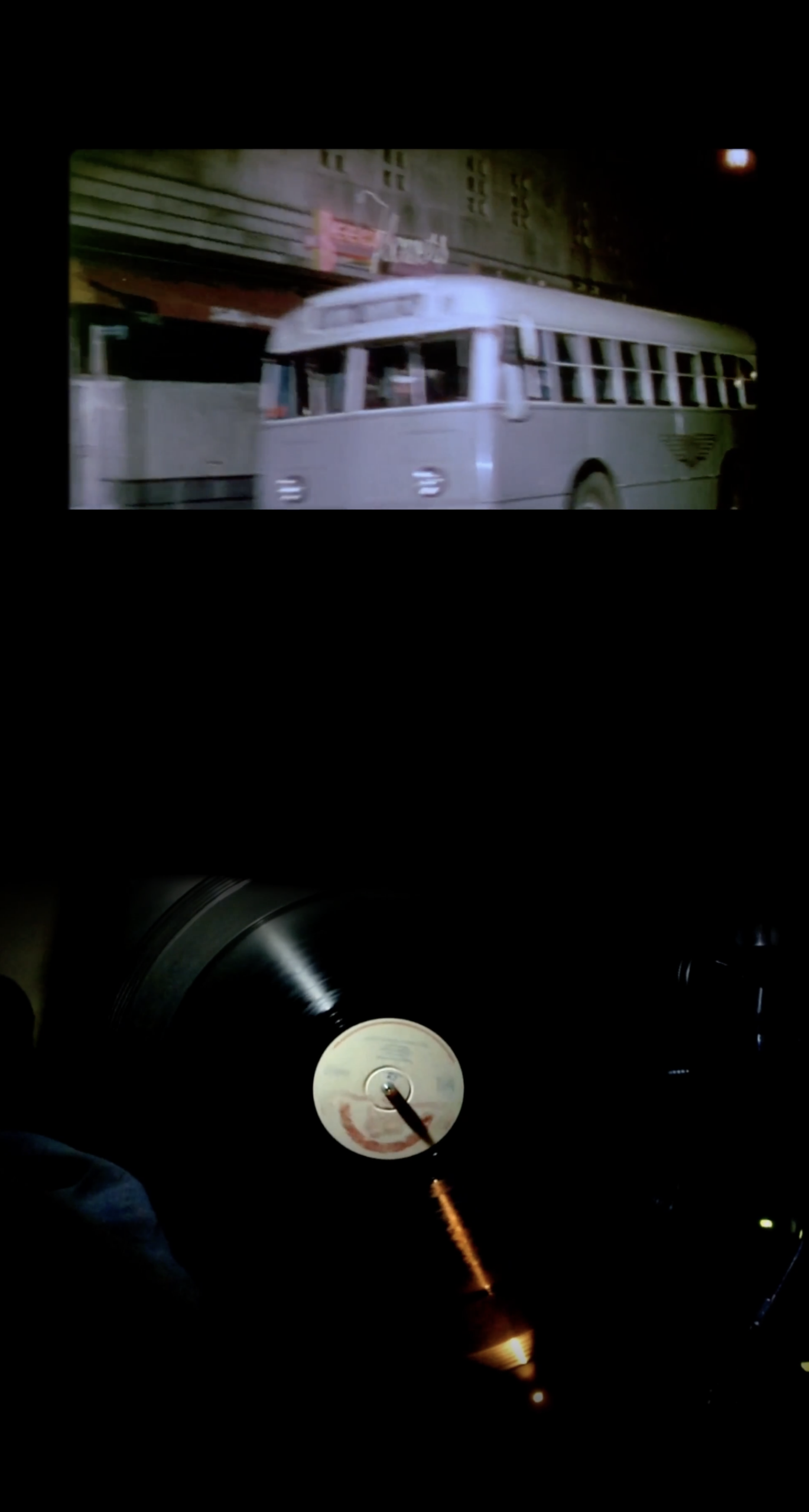
The piece shows the original record spinning on the turntable in dialogue with archival footage from Columbia Pictures.
The video reconstructs the possible final walk of Elizabeth Short — known as “The Black Dahlia” —along Olive Street and Eighth Street in Los Angeles on the night of her disappearance in 1947.
The case became one of the most mediatic crimes of its time after her body was found mutilated and severed at the waist.
The footage comes from a scene filmed by Columbia Pictures with Rita Hayworth for Down to Earth, including rare images of the Crown Grill, the last place where she was seen alive.
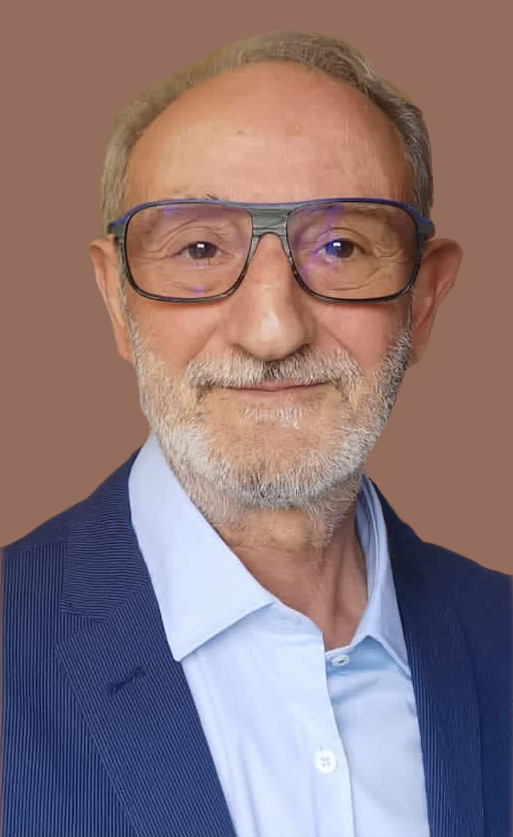
Albert Bayona
After establishing himself as a painter in the late 1980s, Albert Bayona shifted towards digital art and new technologies, developing an interdisciplinary practice focused on landscape, territory and their transformation. Through video, sound, photography, painting and digital media, his work explores contradiction, perception and mechanisms of deception, often introducing tensions that challenge the viewer’s habitual reading of everyday reality. Cinema and music play a central role in his practice, particularly through the manipulation and reconstruction of audiovisual narratives.
His work has been exhibited internationally at institutions including the Museum of Contemporary Art of Rome (MACRO), Taipei Fine Arts Museum (TFAM), Museum of Modern Art of Rio de Janeiro (MAM Rio), Centre for Contemporary Arts (CCA) Glasgow, Torrance Art Museum (California), Arts Santa Mònica and Centre d’Art La Panera, among others. He has also participated in festivals and fairs such as ARCO Madrid, LOOP Barcelona, IN-SONORA Madrid, ADAF Athens, FILE Brazil, MADATAC and VIDEOFORMES.
Bayona’s works are included in the National Collection of Contemporary Art of the Government of Catalonia and featured on audiovisual platforms including HAMACA, LABOCINE and SUYAI.
Throughout his career he has received several international awards in the fields of experimental film, video art and audiovisual creation.