
07 JUN – 08 JUL 2025
The artist Fernando Baena brings us a piece he started more than 20 years ago about desires. For OBLIQUO he will create a new film set and once again invite passers-by in the Lavapiés district of Madrid to pose and think about a wish for a small fragment of time.
Curator: Mario Gutiérrez Cru. Supported by PROYECTOR.
What do you desire when you desire?
Desire is the oldest form of resistance. It has no fixed image or stable grammar, but it permeates all cultures, all bodies, all times. What is desire if not a way of asserting oneself in the face of what is not there? What if desire were a way of remaining?
In The Video of Desire, Fernando Baena proposes a minimal but revealing gesture: filming anonymous people for a few seconds, asking them to think of a desire without expressing it. An action that began more than twenty years ago and continues today, in diverse contexts—Spain, Taiwan, Brazil—as a visual archive of the intimate.
What is important is not the desire itself, which remains off-screen, but its embodiment in the face, in the gaze, in the muscles of the body that does not know what it is saying. What we see is the involuntary expression of longing. A murmur that only the camera can capture. As if the lens became the mirror of what cannot be named.
For OBLIQUO, Baena proposes a new activation of the project in the Lavapiés neighbourhood, creating an open set in the urban space. The act of recording becomes a political act here: a pause in the flow, a place for collective desire in times when everything pushes us not to stop, in a neighbourhood that never stops.
In Tarkovsky’s Stalker, we enter a ‘room’ where our deepest desires are fulfilled… but no one can be sure of what they really want. On the other hand, Dead Poets Society reminds us that poetry, art and desire are what keep us alive. Because to desire is to continue writing against the inevitable. It is to name what does not yet exist. And as Keating would say to his students: ‘Only in dreaming do we have freedom, it always was and always will be.’
María Zambrano said that desire is a form of knowledge that does not seek to possess, but to inhabit. The video of desire does not document, illustrate or explain: it inhabits the moment when something lights up in the face of the one who desires. And there, right there, we all recognise ourselves.
The video of desire is, ultimately, an invitation to pause. To look at another—and at oneself—in that silent moment where everything is yet to happen.
OBLIQUO
Calle Valencia 17, Madrid.
Monday to Sunday from 9am to 10pm.

El vídeo del deseo
30:00
2003-25
A gesture is a form of non-verbal communication executed with some part of the body and produced by the movement of joints and muscles. The language of gestures allows a wide variety of feelings and thoughts to be expressed, from contempt and hostility to approval and affection. Some gestures may or may not be considered culturally acceptable depending on the context in which they are made, as the gesture has an obvious cultural dimension, but others are repeated by almost everyone regardless of the context.
During the recording of a video on substandard housing in Lavapiés, I noticed that the people I interviewed placed their hopes for a resolution to their problems in the very act of recording the video. Their position in front of the camera was similar to that of a wishing well. This led to a series of videos shot in Spain, Taiwan and Brazil showing portraits of people of different races, ages and social status. All of them were captured for an average of about twenty seconds, during which the participants were asked to formulate a wish in their minds but not to express it. Video of Desire is not intended to be a psychological or social experiment but an artistic action that shows the gestures generated by the action of desiring as something innate, involuntary and common to all human beings.


Muestras / Shows
2018 Festival PROYECTOR. Embajadores, 18, Madrid; Le Cube. Rabat
2010 De humor para hoy. Big Screen Project, N. York; y Esto es una plaza, Madrid;
Restless (E)motion. MoCA Museo de Arte Contemporáneo de Korea, Seúl.
2007 Políticas del deseo. Galería Zambucho. Madrid
2005 Nadie (exposición individual). Galería Magda Bellotti. Madrid.
2003 Ligero de equipaje (exp. individual). O Castelinho. Río de Janeiro; Barrios creando barrios. Madrid;
MAD.03 Alterno. Off limits. Madrid.
2001 Festival de Sesenta Piedras, Hualien (Taiwan)
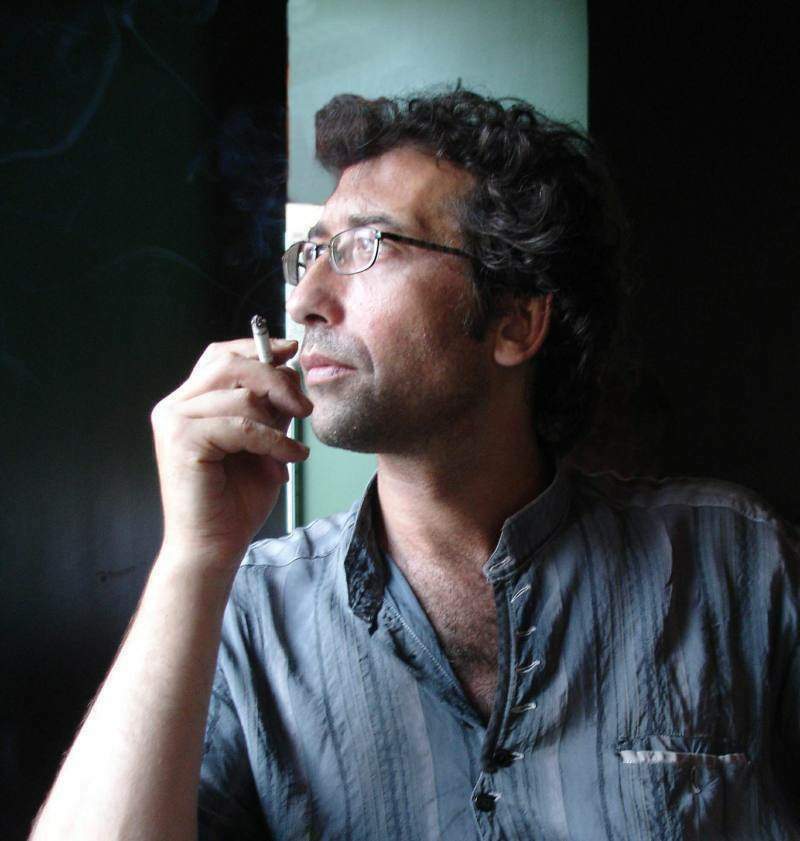
Fernando Baena
Fernando Baena (Fernán Núñez, 1962)
Multidisciplinary artist who cultivates video, photography, installation and performance as a means of reaching the spectator with greater force. In order to question and reference fundamental aspects of everyday life, he seeks open spaces that are more accessible to the public. His works aim to interact by approaching through the use of common materials, and the use of direct discourse that evidences his communicative intention.
Trabajos