
15 APR – 12 MAY 2026
OBLIQUO presents Subtexts by the collective DEMOCRACIA. The exhibition, curated by Mario Gutiérrez Cru, is presented with the support of PROYECTOR.
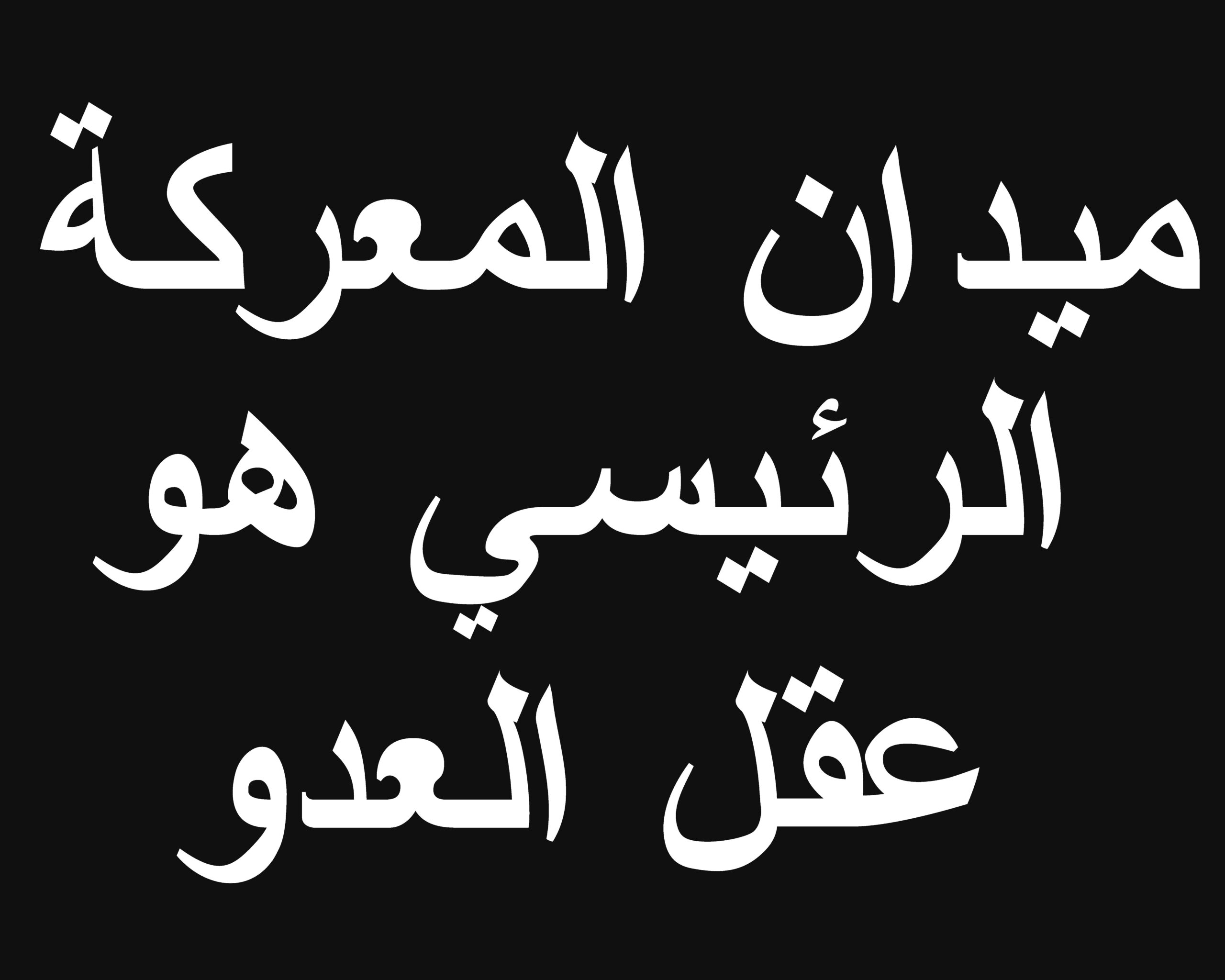
“Politics is not the art of consensus, but the management of conflict.” This statement—central to much contemporary political thought—can be read as one of the conceptual axes of Subtexts. The project is grounded in the idea that democracy is not sustained by harmony, but by the visibility of antagonisms, differences, and disputes that cannot and should not be neutralized.
In the performing arts, subtext refers to what lies beneath words and determines their meaning. Subtexts transfers this notion to urban space, understanding the city as an apparently coherent text constructed by the discourses of political and economic power, beneath which heterogeneous social realities unfold: communities, languages, desires, and conflicts that rarely gain access to channels of public representation.
The project began in 2009 as a public art intervention in Cartagena (Murcia) and has since been developed in different locations—Manresa, Palma de Mallorca and Lyon—sharing a common premise: to work in contexts where migrant communities form a significant part of the social fabric yet remain scarcely represented within public space. In each case, DEMOCRACIA intervened in the usual supports of urban communication—billboards, bus shelters and advertising panels—by inserting messages in the languages of these communities, occupying the same devices reserved for hegemonic discourse in order to introduce a presence that destabilizes the apparent homogeneity of the visual environment.
For its presentation at OBLIQUO, Subtexts is reactivated through a new site-specific proposal in the Lavapiés neighbourhood, paradigmatically diverse and multicultural. On this occasion, the project adopts an audiovisual format, shifting the intervention into the medium of video. This displacement from physical advertising structures to moving image does not alter the core strategy of the work: camouflage within the communicative ecosystem of advertising. The piece adopts the visual codes and formal language of promotional media, infiltrating its logic in order to introduce a content that subtly disrupts its habitual function.
The conflict is not archived; it is displaced and reinscribed.
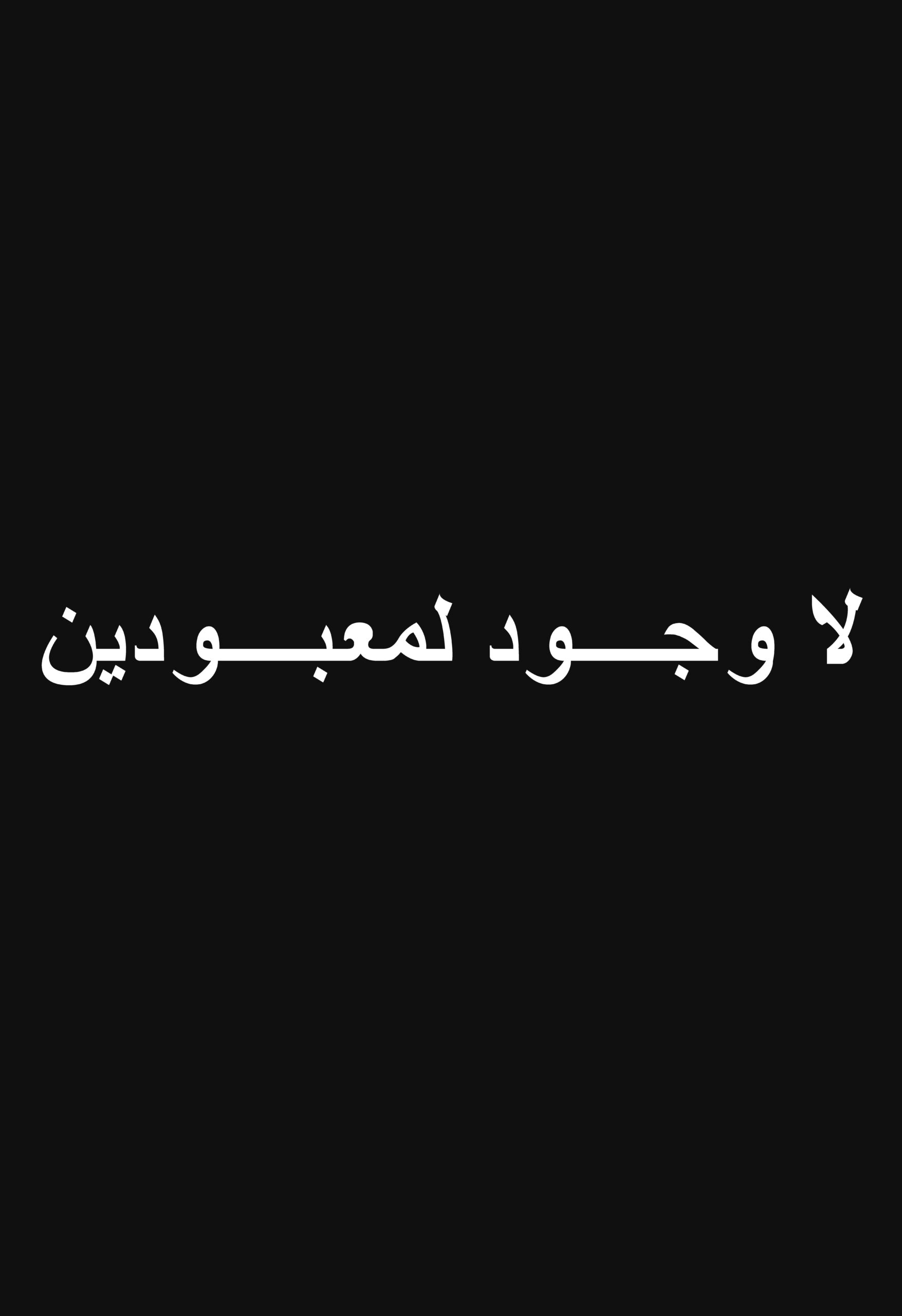
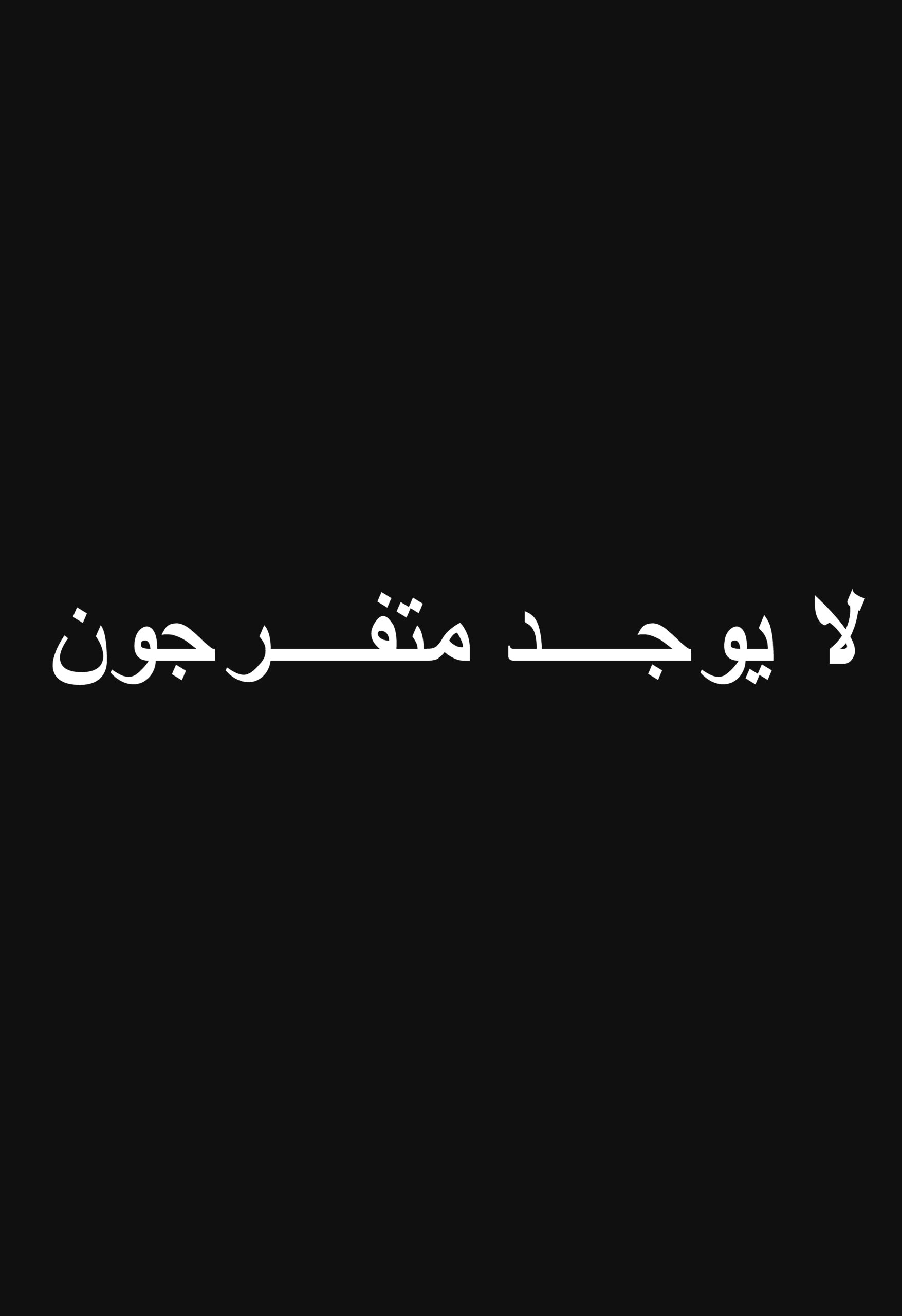
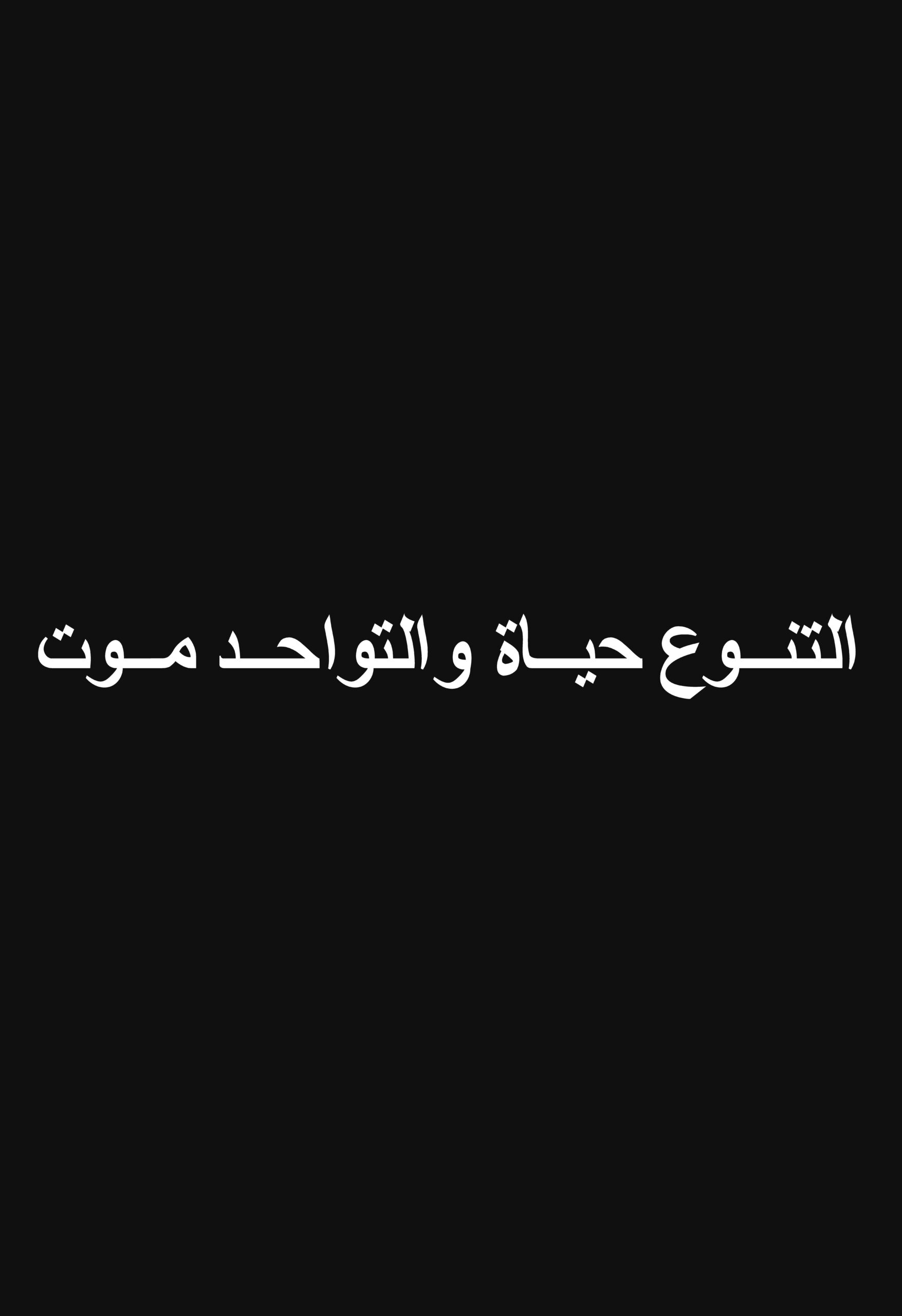
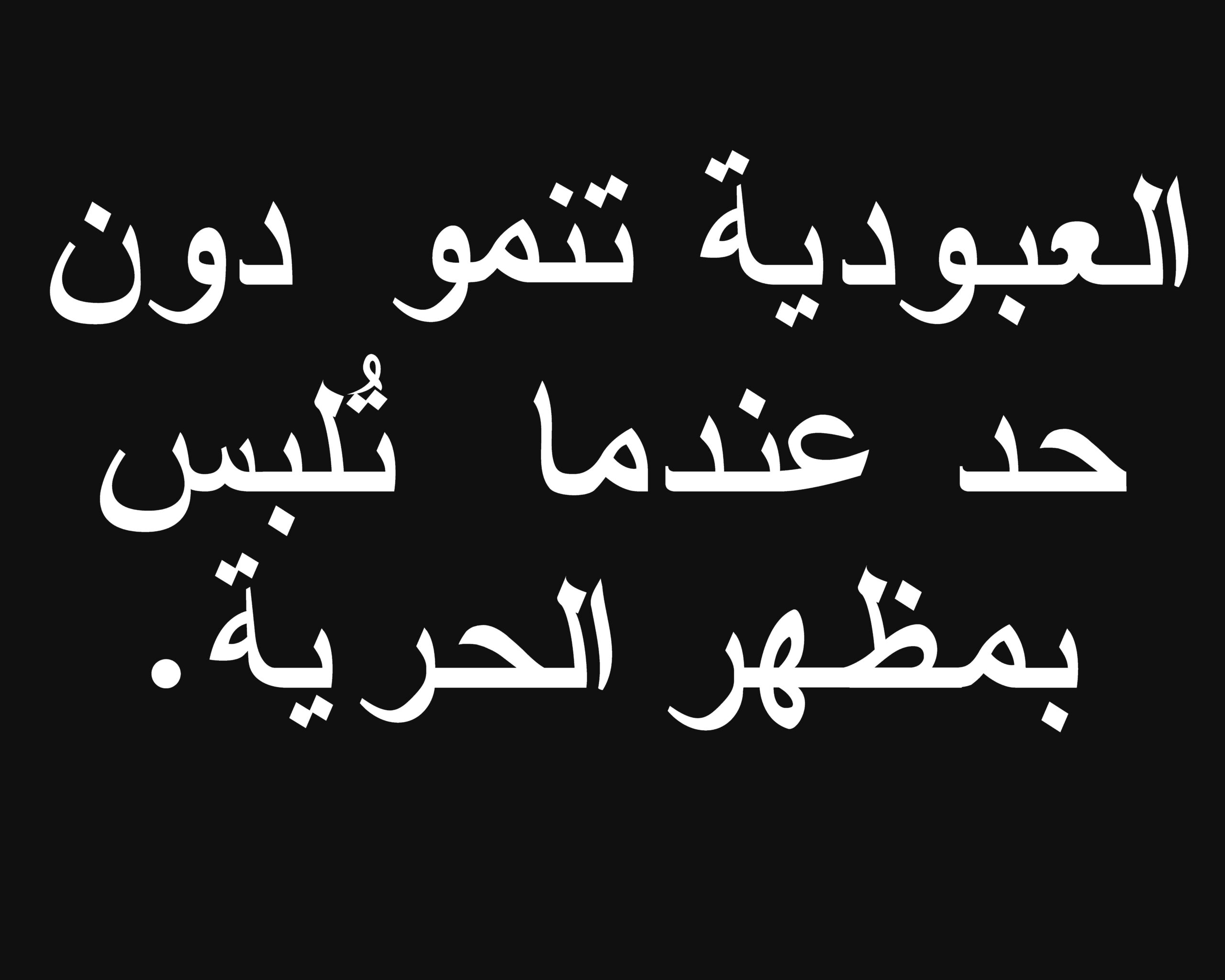
“Slavery grows without limit when it takes the appearance of freedom.” The phrases that structure Subtexts draw from a tradition of critical political thought, yet they do not operate here as illustrative slogans or calls for adhesion. Their effectiveness lies in the friction they generate: for some they are fully legible; for others, an opaque presence that interrupts the illusion of consensus.
As Chantal Mouffe has argued, “every democratic society is traversed by relations of power and conflicts that cannot be eliminated.” Subtexts embraces this premise and rejects the idea of public space as a neutral ground. The introduction of a non-hegemonic language does not seek integration or translation, but rather the recognition of disagreement as a constitutive condition of the democratic.
Far from any complacent multicultural gesture, the work raises uncomfortable questions: who has the right to speak in public space, and in which language? Which forms of life are recognized as legitimate, and which are relegated to the off-frame? In doing so, Subtexts shifts attention from representation to the very structure of communication and its mechanisms of exclusion.
The practice of DEMOCRACIA, developed collectively since 2006, is explicitly situated at the intersection of art and politics. Their work understands art not as a space of symbolic reconciliation, but as a tool of confrontation capable of exposing the fissures of dominant discourse. Subtexts does not propose solutions or images of reconciliation; rather, it insists on the need to assume conflict as an essential condition of any radical understanding of democracy.
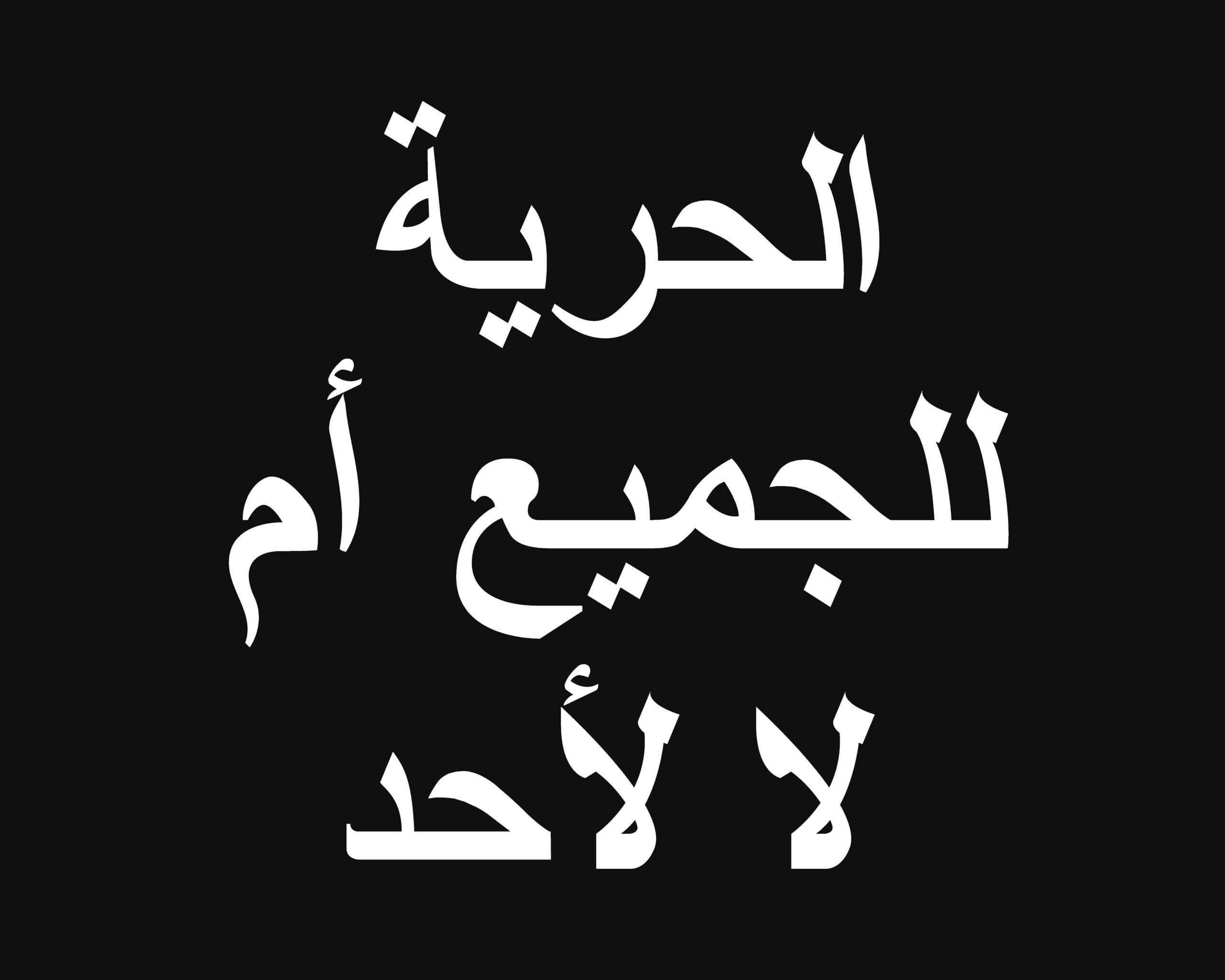
“Freedom must be for everyone or for no one.” In this statement, which runs through the project like a persistent echo, Subtexts finds its political core: a reminder that democracy is not measured by the neutrality of its spaces, but by their capacity to host what unsettles, destabilizes, and challenges the existing order.
OBLIQUO
Calle Valencia 17, Madrid.
Monday to Sunday from 9am to 9pm.
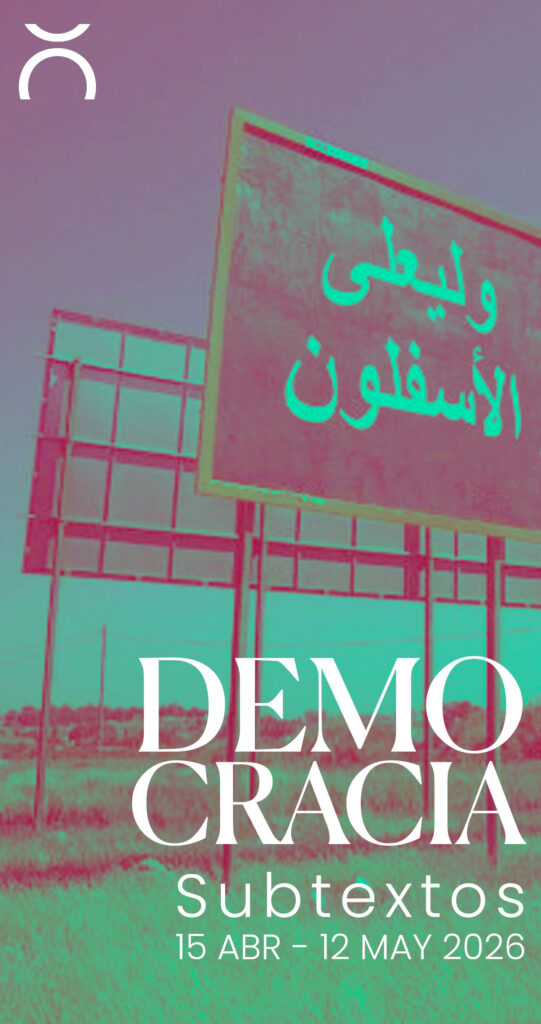
Subtexts
Single channel video installation
2009-26
We work in a specific context: the city of Cartagena (Southern Spain). This is a public intervention aimed to a specific community, the Moroccans, which is part of the city of Cartagena. The strategy consists on inserting messages writting in Arabic in the comunication channels of the city (billboards, bus shelters…) These messages will work to make visible the heterogeneity of civil society .
If in one hand the language is only readable for the Moroccan community, the rest of the public will bear in mind the existence of this group within the social life with their cultural particularities.
Inside the performing arts the subtext is what is beneath the text, the emotions, feelings, ideas or vital concepts hidden along the lines of each dialogue, what each character really feels inside, but this is not explained in the dialogue. If we think of the city as a text that has been built with the messages spreaded on the public space, its subtext would be the antagonisms between the differents communities that make up a particular citizenship.

DEMOCRACIA
DEMOCRACIA
Work team made up in 2006, based in Madrid (Spain).
The decision to work as a group springs from the intention of engaging in an artistic practice centered on discussion and on the clash of ideas and forms of action. The fact of working in a group establishes in itself an interest for intervening in the social sphere. DEMOCRACIA works as a node of interests grouped temporarily for the development of the same objective, which is approached from different perspectives: those of each one of the participants in the project, being these the different agents (permanent and temporary) that shape DEMOCRACIA as the specific communities with which a collaboration is established.
Also DEMOCRACIA works in publishing (they are directors of Nolens Volens magazine) and curatorial projects (No Futuro, Madrid Abierto 2008, Creador de Dueños, Useful Art). They were founders and part of El Perro group (1989-2006).